
Nobody starts a wedding business organized. You start it trying to land a client. The inquiry form is whatever came with the website template, the contract is a PDF someone sent you, the invoice is a Word doc with your logo pasted at the top. It works, right up until the Saturday you have three weddings in a row and a bride emails to ask whether her deposit went through.
That is the moment most vendors decide to "get organized." What separates the ones who actually do from the ones who scramble again next year is a habit, not a tool. They go back and look at their systems on purpose, every year, before the season starts. The vendors clearing six figures almost always say some version of the same thing: the difference was the systems, not the talent.
Here is what that audit looks like, section by section, with the specific fix for each one.
One photographer we spoke with ran a template website for years. It had a contact form. The form worked. Every inquiry arrived in her personal email inbox, she replied from her personal email inbox, and the conversation lived there forever. Her CRM only found out about a couple once they had already booked and she manually typed them in.
Think about what that means. The "are you available on the 14th?" replies, the follow-ups she meant to send, the couples who went quiet after a quote. None of it was tracked anywhere. She couldn't tell you her inquiry-to-booking rate because the inquiries were spread across search results in Gmail.
The couples on the other end are shopping harder than they used to. The Knot's 2026 Real Weddings Study found that 37% of couples reached out to more vendors than they originally planned, and 52% named responsiveness as the thing that builds trust. If your inquiries live in an inbox, responsiveness depends on whether you happened to open that inbox.
The fix is to give inquiries one door. In Maroo, that door is the Leads pipeline. You embed a lead form on your website, and every submission lands as a lead with a stage, a source, and the details the couple typed. Connect your Gmail to Maroo's Emails and your reply goes out from your own address but stays attached to that lead. Three weeks later, when you want to know whether you followed up, the answer is on the lead, not in a search bar.
A wedding photographer told us he genuinely dislikes email. Not the clients, the email. So he timed himself on the one he dreads most: the photo timeline email. A couple fills out his timeline questionnaire. He reviews it, works out when hair and makeup needs to wrap, how long portraits get, when to sneak the couple out for sunset. Then he writes it all up. Forty-five minutes, every time.

Here is the thing he noticed when he finally looked at ten of those emails side by side. About 80% of the words were identical. The intro, the explanation of why a first look changes the day, the reminder about buffer time, the sign-off. The only parts that changed were the times and the names.
He had already built two quick templates for the inquiry stage ("yes, I'm available" and "sorry, I'm booked") and said those alone gave him hours back. He just hadn't applied the same logic to the expensive email. Client communication gaps rank among the top five pain points in the 2025-26 Wedding Pro Survey of 553 professionals, and most of that gap is not a lack of caring. It's the cost of writing the same thing from scratch.
Maroo's Workflows are built for exactly this repetition. You pick a trigger, in this case "questionnaire submitted," and add an action: send an email template. The template carries the 80% that never changes. When the questionnaire comes back, the draft is already waiting inside the couple's project. You add the times, adjust the tone, and send from the Project so the thread stays with the rest of their work. Forty-five minutes becomes ten.
A planner described the feeling as tripping over her own feet. A bride texted a simple question: "Did we ever finalize the rental count?" The answer existed. It was in a questionnaire response saved as a PDF, cross-referenced against a quote in one tool, a contract addendum in another, and a note she had typed into her phone during a venue walkthrough. Twenty minutes later she had it. The bride had been waiting the whole time.
Multiply that by the number of active clients. The average couple hires 13 vendors and is engaged for about 14 months, according to WeddingPro's read of the 2026 Real Weddings Study. Every one of those vendors is juggling dozens of couples at different stages, and "different stages" is the part that breaks. The couple in discovery needs a different kind of attention than the couple three weeks out.
Being organized, in the way this planner meant it, is not a color-coded drive. It is being able to answer any client question in under a minute because everything about that client is in one place.
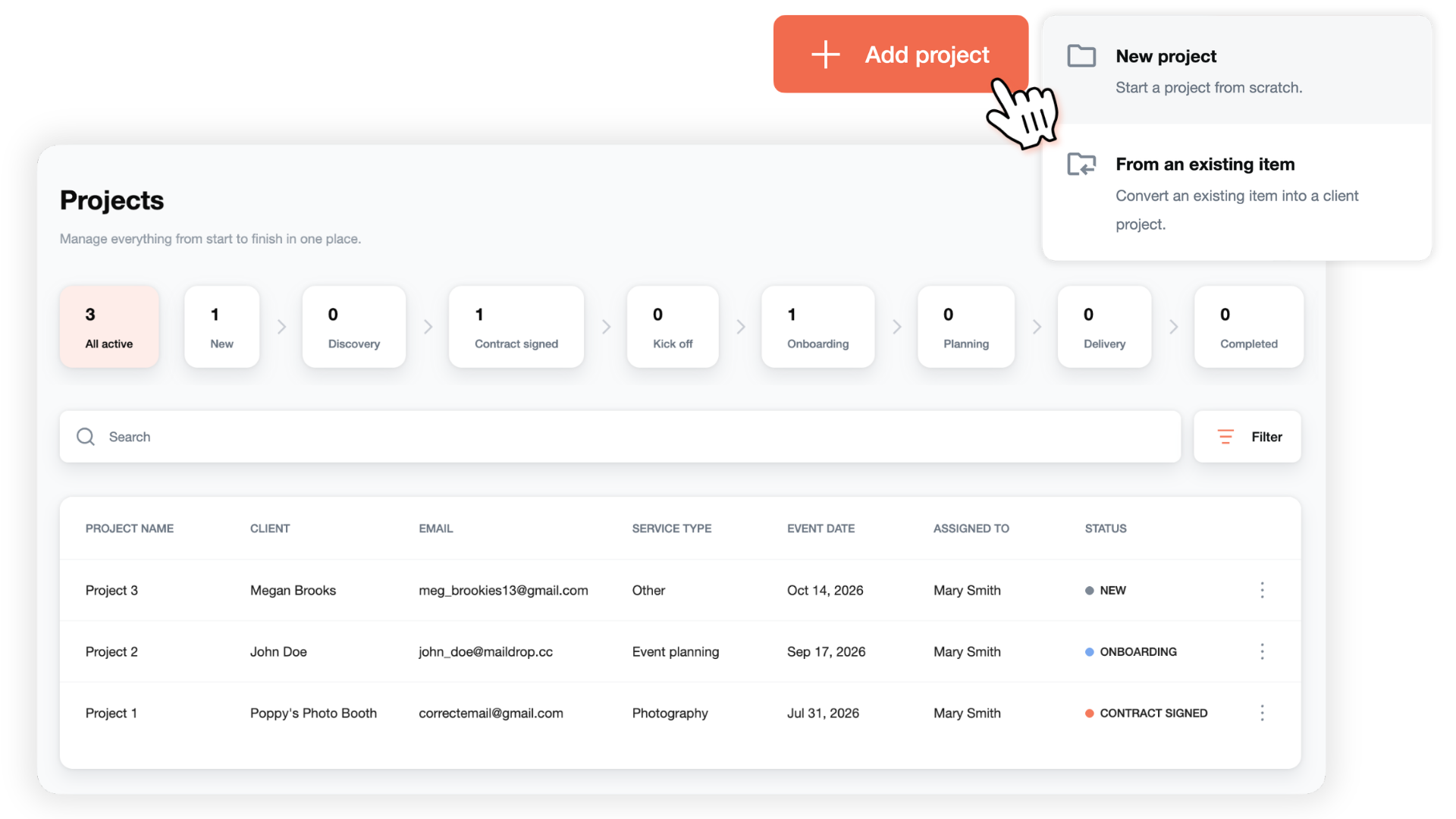
That is what Maroo Projects does. A project is one workspace per client or event: contacts, the event date, the assigned teammate, the quote, the signed contract, questionnaire answers, invoices, files, notes, and an activity timeline of what happened when. You can start a project from scratch or build one from an existing lead, quote, contract, or invoice. Each project sits in a stage, from Discovery through Contract signed, Planning, Delivery, and Completed, so the dashboard answers "where is everyone?" at a glance.
Every December the same conversation happens. The accountant asks for a list of every contractor you paid this year and how much. The photographer opens Venmo. Then Zelle. Then a notes app where she was pretty sure she had written down the second shooter's day rate for that October wedding. "Before I had a system," one told us, "I was a mess in my accounts."
Second shooters, associate photographers, assistants, day-of coordinators, extra bartenders. Event businesses run on contractors, and the payment record usually lives wherever the money happened to move that day. The tax side got a real change too. Under the July 2025 law, the 1099-NEC reporting threshold rose from $600 to $2,000 for payments made in 2026, per OnPay's summary. Good news for anyone paying a shooter once, but you still need the records to know which side of the line each contractor landed on.
Two photographers we heard from independently praised the same thing: paying an associate through the same platform that holds the contract and the invoice, and being able to print the whole year for the accountant in one go.
In Maroo, the record builds itself. Log the shooter's hours in Time Tracker the week of the wedding, with a rate and the project it belongs to. Send the contractor payment straight from that entry by ACH, with no fee on business-to-business transfers. Maroo collects the W-9 and prepares the 1099-NEC in Tax reporting, so December is a download instead of an archaeology dig.
Here is the pattern that came up again and again. A vendor starts with a side hustle. All they need is a way to send a contract and an invoice, so that's all they set up. The business grows. Suddenly they need questionnaires, then a place to track leads, then a way to pay a contractor. Each time, they brace for shopping for another tool, and then feel a small wave of relief on discovering the thing they already use can do it.
That relief is nice. It also means they were running without the feature for months because nobody told them to look.
The vendors who avoid this put a date on the calendar. Late in the off-season, before inquiries pick up, they sit down with their own process and ask two questions: what did I do by hand this year that I could hand off, and what did I not do at all because I ran out of hours? It's worth being honest about the second one. In a May 2026 survey of 1,000 small business owners, 53.5% said they lose sleep over the business at least a few times a week. A lot of that is work that could have run on its own.
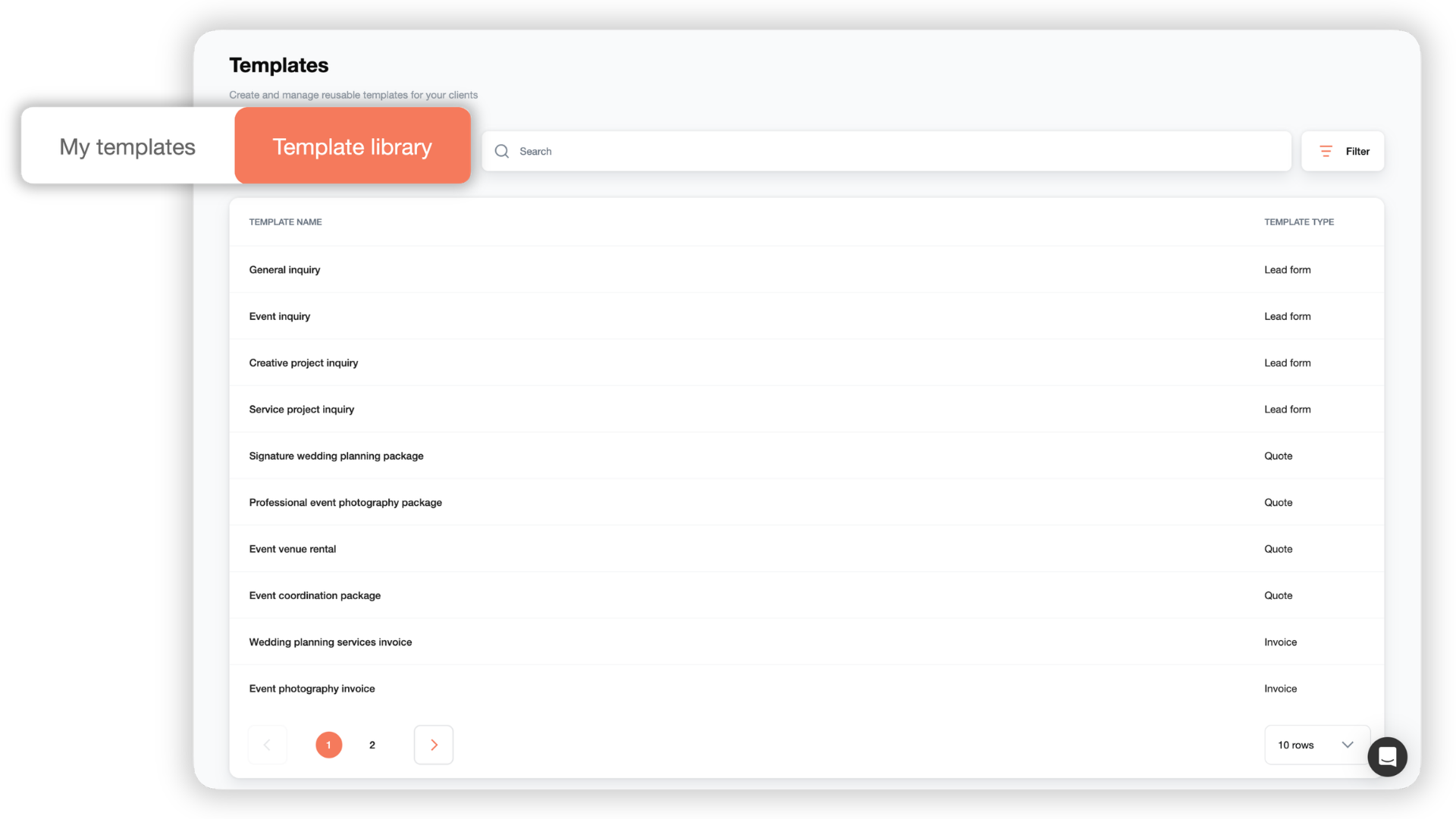
Maroo makes the review easier to act on. The Template Library has pre-built lead forms, quotes, and invoices by industry that you can copy and adjust rather than build from nothing. Workflows can be duplicated and edited, so refining a process is a tweak rather than a rebuild. And because Leads, Projects, Emails, Time Tracker, and payments live in the same place, "does it already do this?" gets answered by clicking around for ten minutes rather than by another software trial.
You don't have to fix all five before the season starts. Pick the one that cost you the most sleep last year. For most vendors it's either the inbox or the December scramble. Fix that one, run the season, and put the next review on the calendar now.
If you want to see how the pieces fit together, Maroo is free to start and runs leads, projects, emails, contracts, invoicing, and contractor payments in one place. Sign up, then pick that one section and do the fix this week.