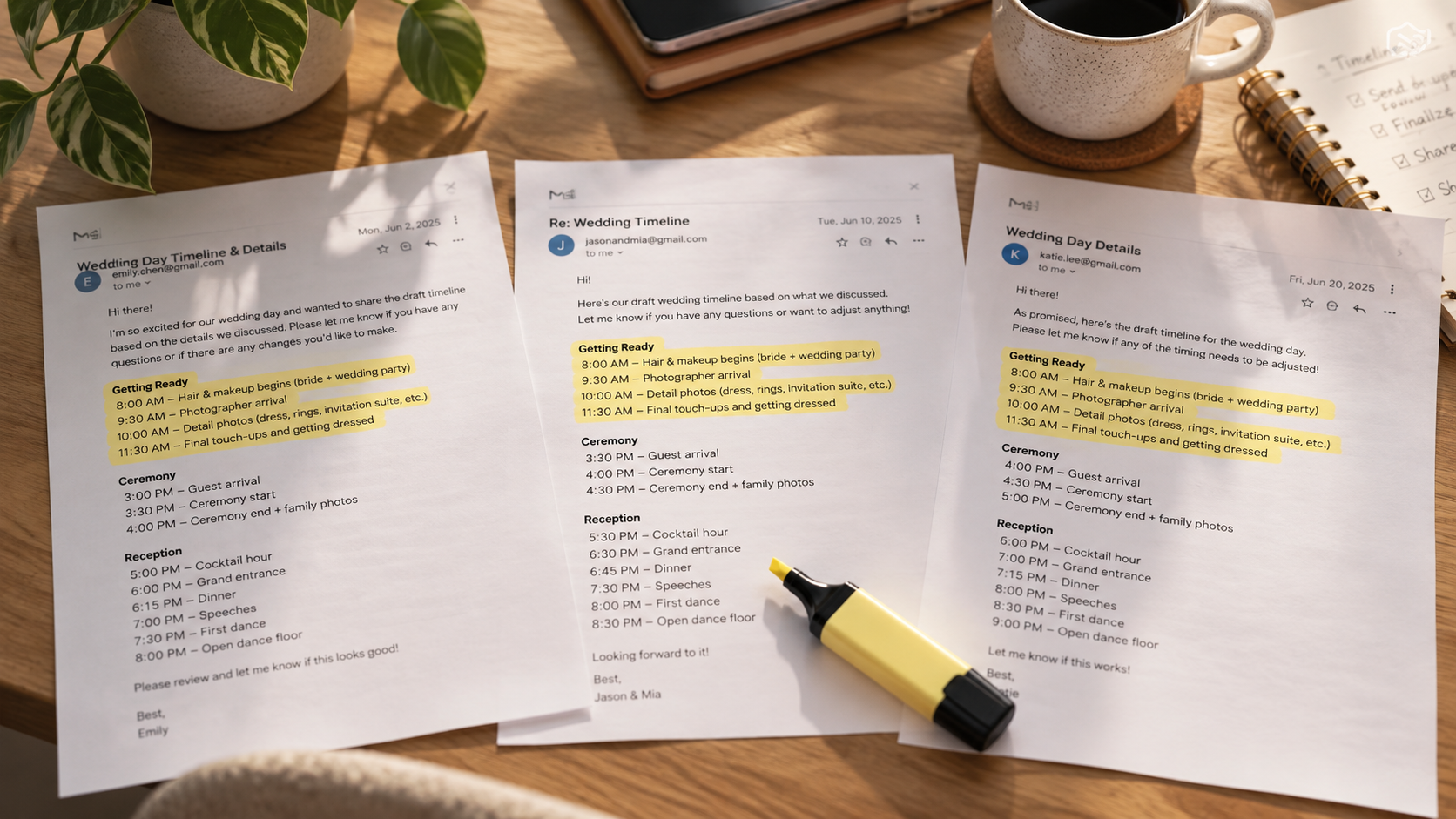
A wedding planner described the feeling as tripping over her own feet. A bride texted on a Thursday afternoon: "Did we ever finalize the rental count?" Simple question. The answer existed. It was in the couple's questionnaire response, saved as a PDF. But the number had changed after a venue walkthrough, and that update was in a note she'd typed into her phone. The revised quote lived in one tool. The signed contract addendum lived in another. The deposit that covered the rentals was in her bank app.
Twenty minutes later she had the answer. The bride had been staring at her phone the whole time.
The planner is good at her job. The couples she works with love her. But she said the same thing a lot of vendors say quietly: "When I'm disorganized, I feel like I'm tripping over my own two feet." The organization wasn't the problem. Where things lived was.
Most vendors think of organization as a color-coded Google Drive and a good folder naming convention. That's tidiness. Tidiness means you can find something if you remember where you put it.
Organized, in the way the planner meant it, means being able to answer any question about any client in under a minute without remembering anything. The rental count, the deposit status, the timeline change, the second shooter's name. All of it, in one place, with the history of how it got there.
The scale of the problem is bigger than it looks. According to WeddingPro's summary of The Knot's 2026 Real Weddings Study, the average couple hires 13 vendors and is engaged for about 14 months. That's 14 months of questionnaires, revisions, payments, and "quick questions," per couple, across every active couple you have. A planner with 20 weddings on the books is holding something like 280 vendor relationships in her head, at different stages, each of which can generate a Thursday afternoon text.
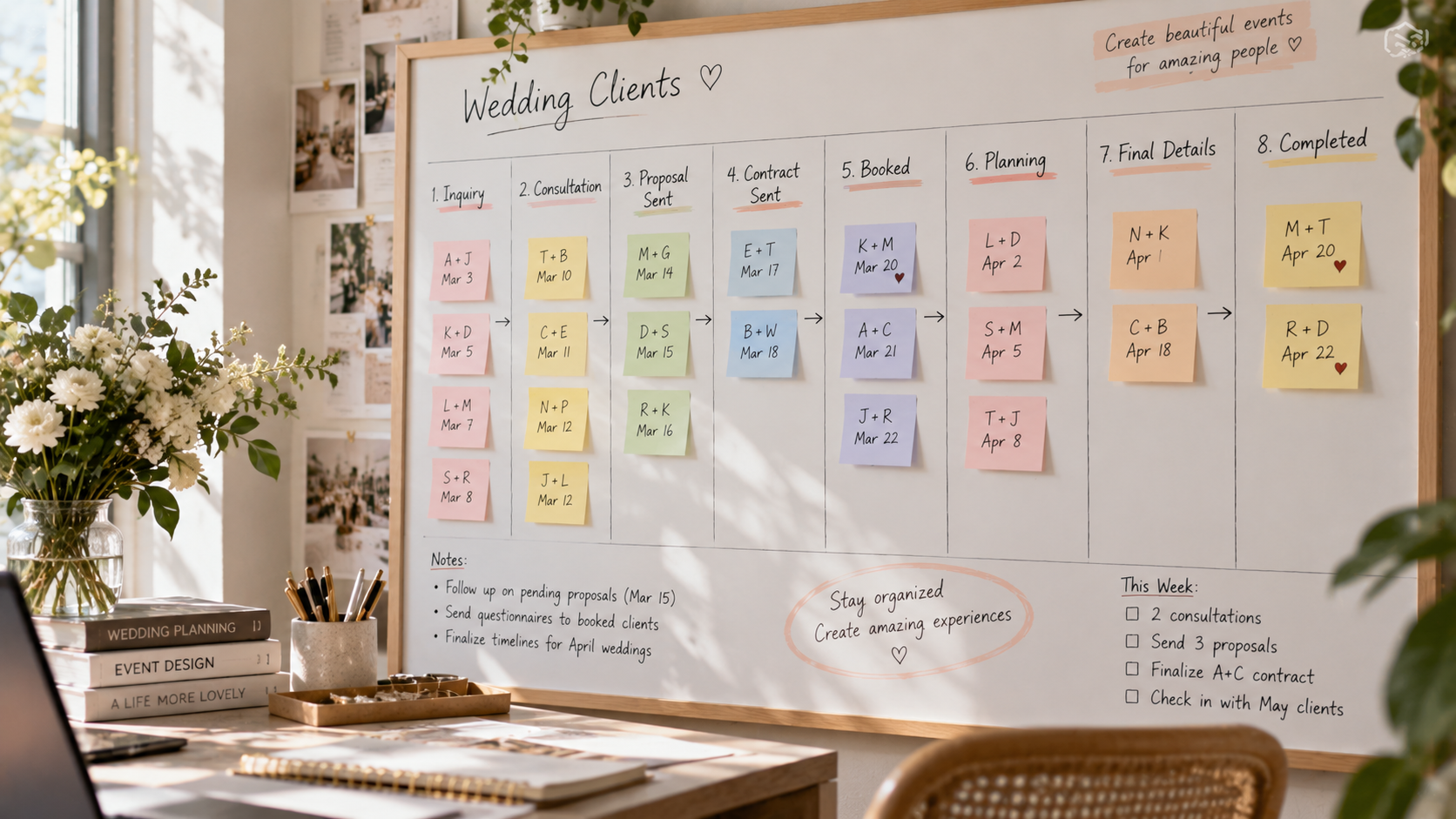
"Different stages" is the part that breaks even careful vendors. The couple you booked last week needs an onboarding email and a questionnaire. The couple three weeks out needs a final timeline and a balance reminder. The couple whose wedding was last month needs a gallery delivery and a review request. If all three are just "clients" in a list, you rely on memory to know who needs what. Memory is fine until the busy season, which is exactly when you need it most.
This is what Maroo Projects is for. A project is a single workspace for one client or event. It holds the contacts, the event date, the teammate assigned to it, and every document that belongs to that couple: the quote, the signed contract, questionnaire answers, invoices and their payment status, uploaded files, notes, and an activity timeline that shows what happened and when.
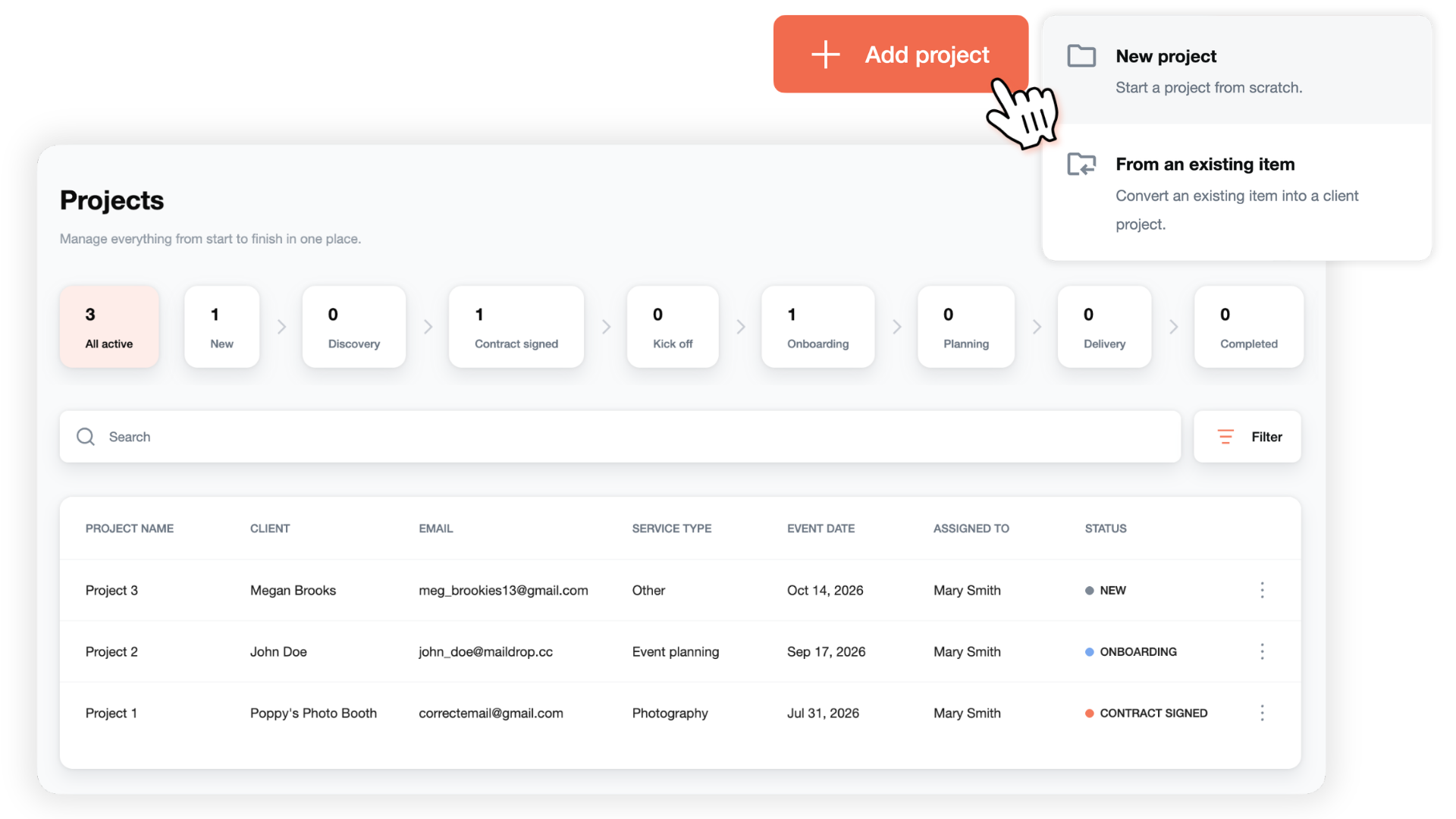
You can start a project from scratch or build one from something that already exists, like a lead who just booked or a contract that was just signed. Each item can be linked to one project, and it stays available in its original section too, so nothing moves out of your invoices list just because it now belongs to a wedding.
The stages are the part that answers the "who needs what" question. Every project sits in one: New, Discovery, Contract signed, Kick off, Onboarding, Planning, Delivery, or Completed. The dashboard shows how many projects are in each. When the planner opens Maroo on a Monday, she doesn't scan a list of names. She looks at the Planning column and the Delivery column and knows what this week is.
And when the Thursday text comes in, she opens the project, reads the note from the walkthrough next to the revised quote, and replies in under a minute.
Write down the stages your clients actually pass through, in your words. Not "pipeline stages" from a software demo, your real ones. Then take your five most active clients and put every document you have for each of them into one place, tagged with the stage they're in. If it takes more than an hour per client, that's the measure of how scattered things were.
If you want the stages, the linked documents, and the activity history without building it yourself, Maroo is free to start.