There is a number that comes up a lot when experienced planners talk about their ceiling. Forty. Maybe forty-five. That is where the wheels start wobbling -- not because the weddings get harder, but because the administrative weight of managing that many concurrent clients breaks whatever patchwork system got you to thirty.
One veteran coordinator described hitting forty-two weddings in a year and realizing she could not remember which bride had the shellfish allergy and which one had the estranged father who was not supposed to be seated near the head table. She was confusing clients. Not on the wedding day, but in the weeks leading up.
She did not scale back. She built a system. And the next year, she did fifty.

Not every wedding takes the same amount of work. A day-of coordination package might involve fifty distinct tasks. Full-service planning can hit a hundred and fifty tasks stretching across six to twelve months.
The planner who figured out fifty weddings a year did it by sorting her calendar into task tiers. Full-planning clients got dedicated weekly blocks. Day-of clients got intensive windows six weeks out. And she built a hard rule: never more than two weddings in a single weekend. Three weddings in a weekend meant at least one couple got a version of her running on adrenaline instead of preparation.
The other piece was an office manager -- not a luxury hire, but the thing that made fifty weddings possible instead of forty. Someone whose entire job was keeping clients on track between touchpoints.
Here is what breaks first when a planner scales without systems: not the big stuff, but the small stuff. A follow-up email that does not go out. A deposit deadline that passes because it was tracked in a spreadsheet nobody opened that week. A lead that sat in a Gmail tab for nine days.
The planners who get to fifty weddings and stay sane have moved past the patchwork. They are not running their CRM out of a spreadsheet, their tasks out of a separate app, their invoices out of a third tool, and their contracts out of email attachments.
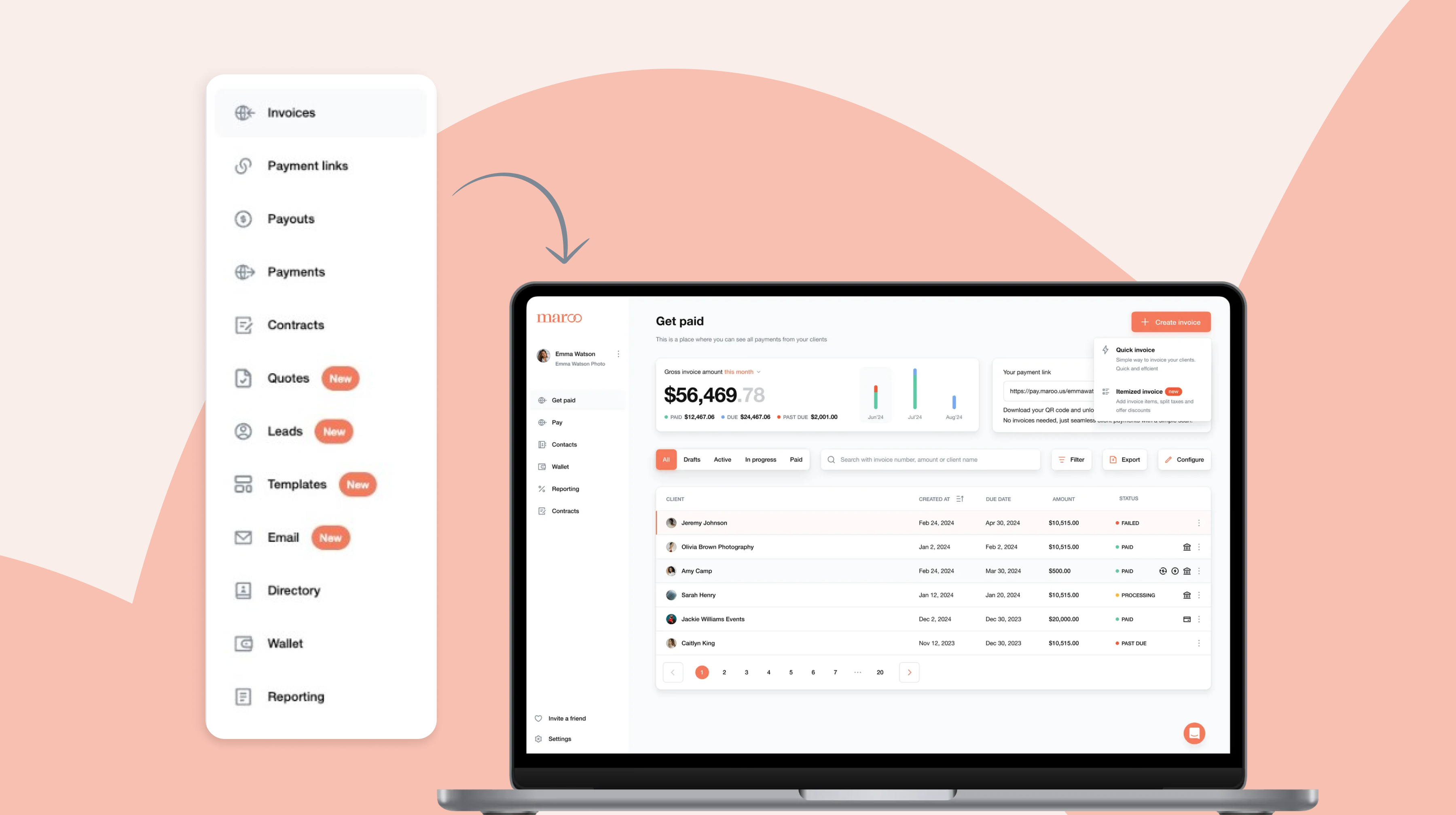
Maroo's CRM brings lead tracking, client management, repeatable client questionnaires, invoicing, and contracts into one connected workflow. That consolidation is about eliminating the gaps between systems where deadlines die and details get lost.
For the task management side -- the auto-generated deadlines, the timeline templates and checklists that adjust to each wedding date -- the goal is the same: make the system carry the administrative weight so your brain is free for the work that actually requires you.
The real danger of scaling is not burnout, though that is real enough. It is becoming a factory. Fifty weddings a year only works if each couple still feels like they are your only client. That feeling comes from being genuinely present -- and you can only be present when you are not mentally tracking seventeen open loops that should be living in a system instead of your head.
Build the systems first. Hire the support. Set the weekend cap. Then grow into the number that works for your life, not just your revenue.