Four months before every wedding, one photographer sends a questionnaire. Parents' names. Bridal party details. Full itinerary. Must-have shots. Inspiration photos -- Pinterest boards welcome. Special family dynamics: divorced parents, step-families, anyone who shouldn't be grouped together in the same photo.
Then two weeks before the wedding, a final call. Anything change? New hair stylist? Different ceremony time? Updated bridal party count? No surprises. Zero.
This isn't micromanagement. It's the process that separates a gallery full of exactly the right moments from a gallery with obvious gaps.
Family dynamics are the landmine nobody sees coming. A photographer who doesn't know the bride's parents are divorced and remarried will group them together for the family photo. That's not just awkward -- it can ruin the moment entirely. One wrong grouping and the emotional tone of the family session shifts from joy to tension.
The questionnaire catches all of it. Who walks with whom. Which family members need separate photos. Step-parents who should be included. Family members who've passed away but whose absence should be acknowledged in how the remaining family is arranged.
Must-have shots are the other critical piece. Every couple has moments they care about most. The grandfather's first dance. The detail on the custom invitation suite. The dog in the ring bearer outfit. If the photographer doesn't know about these in advance, they're relying on real-time communication during a day when everyone is distracted and emotional.
Insufficient specific shots and poor communication are the top complaints brides have about photographers. Both are prevented by information gathered months in advance. A photographer who knows the shot list before the wedding doesn't miss shots. A photographer who learns the shot list at the reception misses everything that already happened.
Four months is early enough to be accurate and far enough out for adjustments. But things change. Bridal parties shift. Venues change ceremony locations. Timelines get adjusted when the couple realizes hair and makeup takes longer than they thought.
The two-week call is the safety net. It catches everything that shifted since the original questionnaire. A new timeline means a new shot plan. A reduced bridal party means faster group photos. An added location means travel time that wasn't in the original schedule.
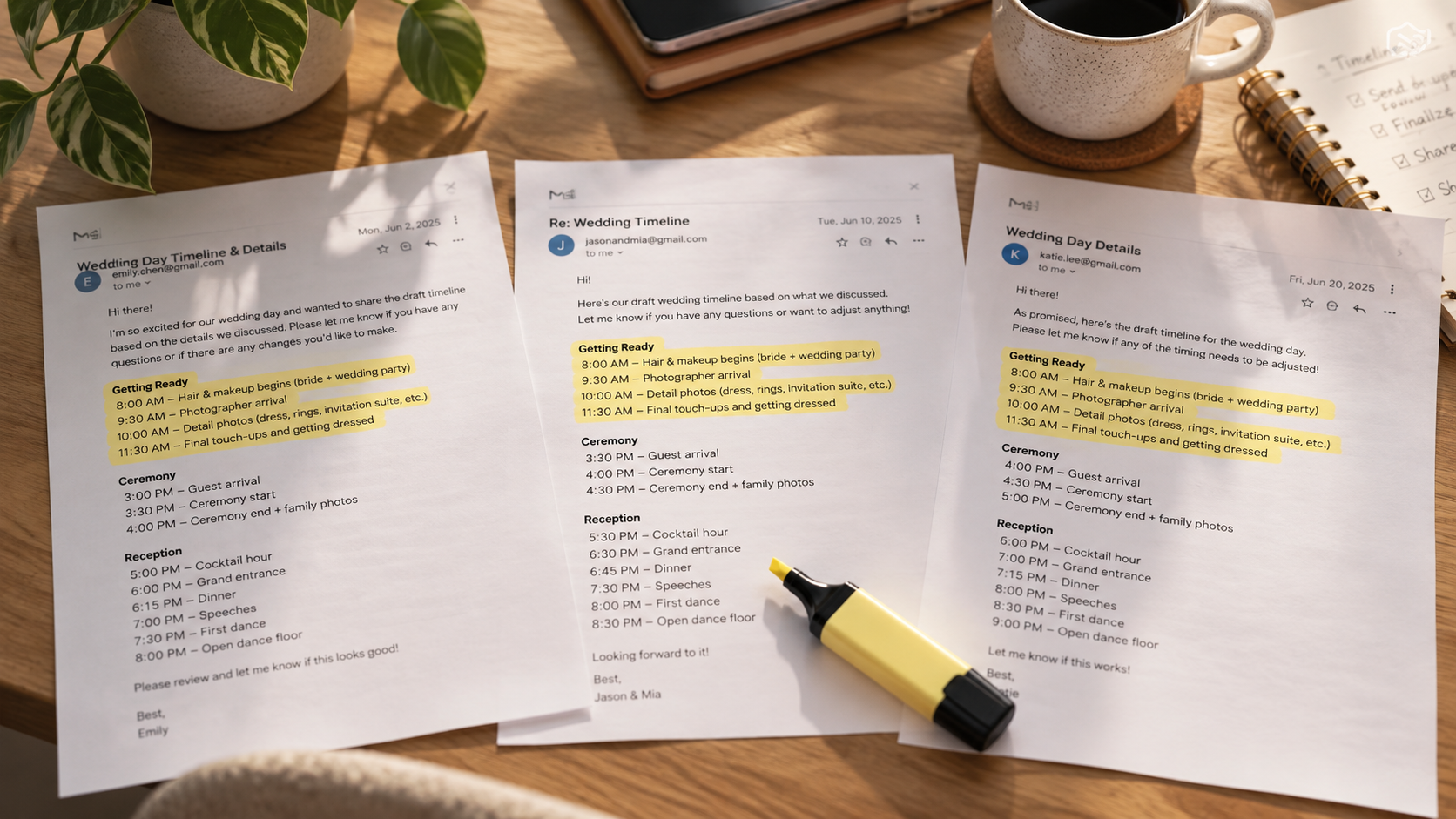
After the final call, the photographer updates the timeline and sends it to anyone who needs it -- second shooters, the planner, sometimes the couple themselves. Everyone walks into the wedding day with the same information. That alignment is what makes the day feel effortless.
If you're doing this for five weddings a year, you can keep it in your head. If you're managing thirty or forty weddings a season, you need a system. Maroo can turn the questionnaire into a reusable template you share at the four-month mark, then track its status, send a reminder if needed, and return to submitted responses when the timeline changes. The final call should be a calendar reminder. The timeline update should be a process, not a scramble.
You can give a lead form or questionnaire its own image and preview it with your selected fonts and colors before sharing it. Watch the form-image tutorial. A Maroo Project keeps a client’s contacts, documents, files and notes together. Start from scratch or create it from one eligible existing lead, quote, contract or invoice, then connect other records as needed.
Contracts that reference the questionnaire process set the expectation from the start. When the contract says "client will complete a detailed planning questionnaire by [date]," the couple knows it's part of the process, not an afterthought. And when the deliverables in the contract reference the shot list that comes from that questionnaire, the whole system connects.
The earlier you gather details, the fewer fires on the day. Four months out is the sweet spot -- close enough that the couple has most of their decisions made, far enough out that there's time to adjust if something big changes.
Photographers who are already feeling the weight of wedding season burnout benefit most from this kind of systematization. When the questionnaire is a template and the final call is a routine, the mental energy spent on logistics drops dramatically. You're not reinventing the process for every wedding. You're following a system that works, and spending your creative energy where it actually matters -- behind the camera on the day.