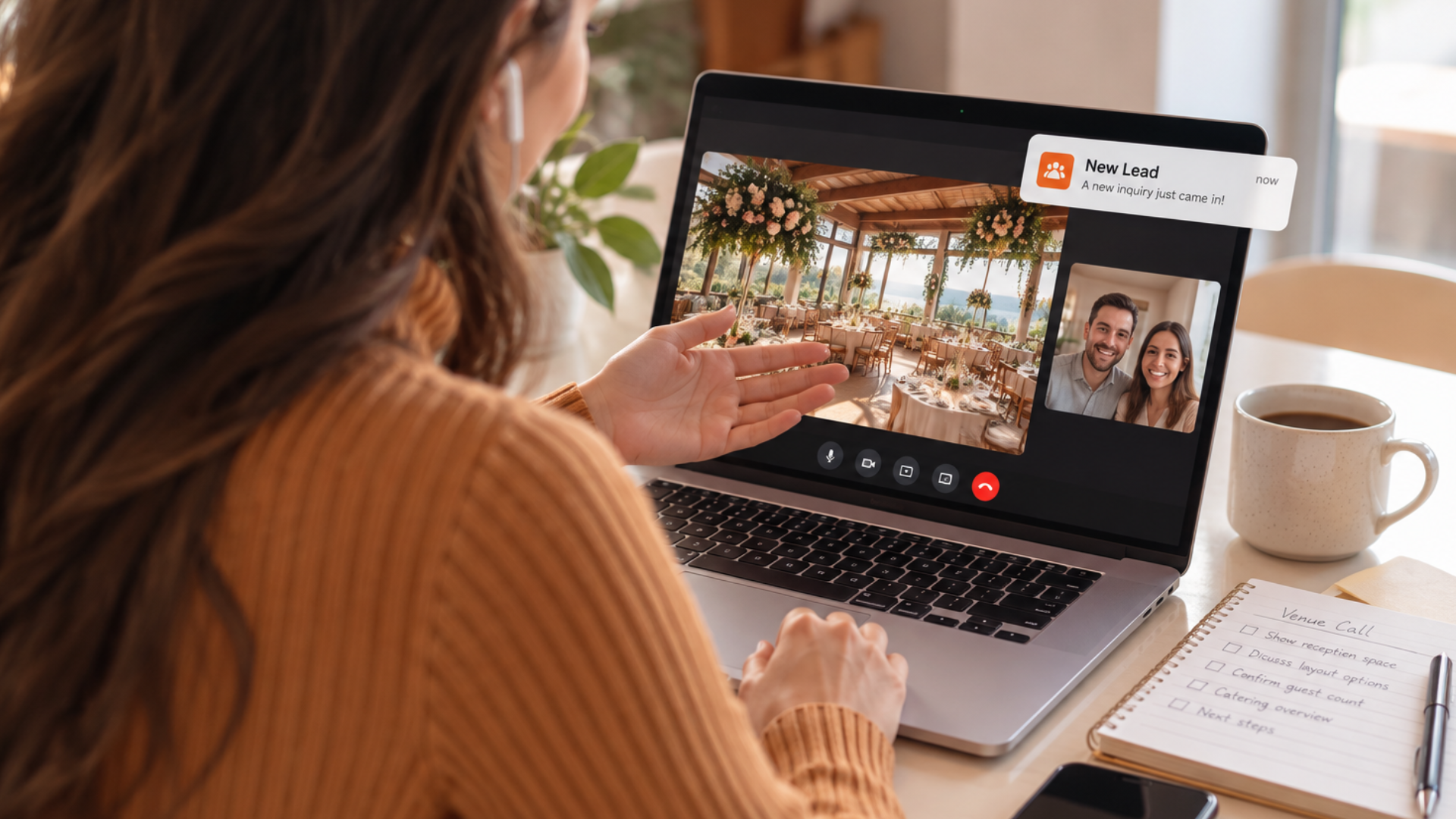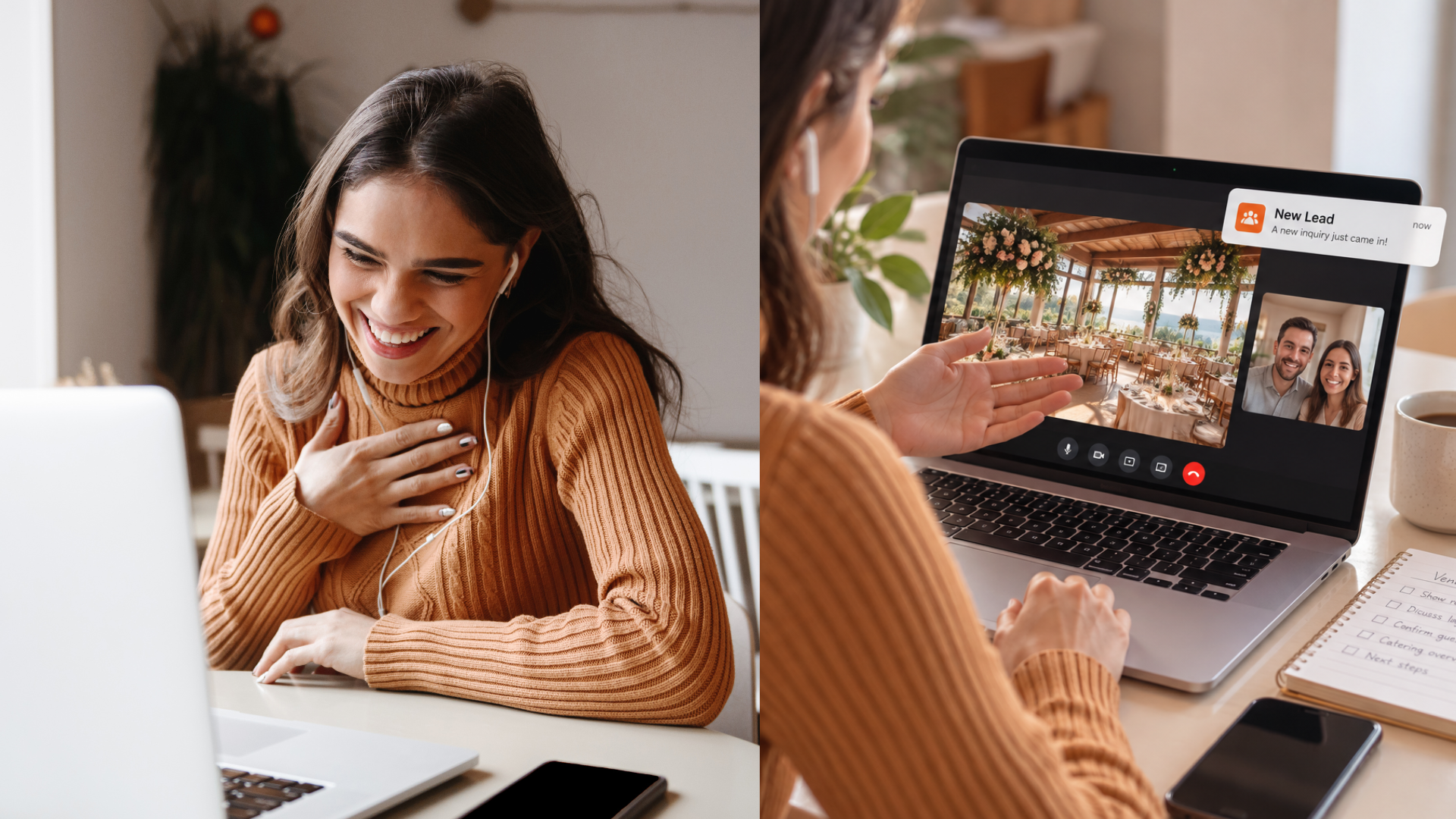
You're on a client call. The couple on screen is walking you through their venue, and a notification slides across the top of your laptop: new inquiry. You glance at it, say "sorry, one second," and glance again. A different couple. They've been engaged for a week and they've almost certainly messaged three other photographers tonight.
Twenty minutes later, another one lands. Your call is still going.
Ask any wedding vendor who has been at this a while and they'll tell you the same story with different details. The inquiries don't arrive when you're at your desk with coffee. They arrive during a call, in the middle of a wedding day, at 11pm on a Sunday when you finally put the kids down. And the couple sending them is not sitting patiently.
A content strategist who works with event vendors watched her sister plan a wedding last year and described the experience from the couple's side. Her sister let a vendor go. Not because the work was bad. Because the communication was slow enough that getting an answer had become its own chore. "If you're making my life difficult," she said, "I don't have time for it."
That instinct shows up in the data. In The Knot's 2026 Real Weddings Study of more than 10,000 couples, 52% named responsiveness as the key to building trust with a vendor, and 37% said they contacted more vendors than they originally planned. That second number is the one to sit with. The couple who inquired with you tonight also inquired with two or three others, and the first real reply is going to shape which one they picture themselves working with.
It's not that couples decide instantly. The 2025-26 Wedding Pro Survey found that over half of vendors see couples take one to four weeks to make a decision. But the shortlist gets made fast, and a reply that arrives two days later often arrives after the shortlist is done. Vendors in that same survey listed ghosting as a near-universal frustration, and some of that ghosting is couples who quietly moved on.
The obvious answer is to reply faster, which in practice means checking your phone constantly and drafting responses in parking lots. Most vendors do this for a season or two and burn out. One photographer described writing the same "yes, I'm available, here's how it works" email dozens of times before it occurred to him that the email never actually changed.
The better answer is to separate the two things a first reply does. The first job is acknowledgment: you got the inquiry, you're a real person, here's what happens next. The second job is the personal part, the note about their venue, the answer to the question they asked. The first job can be automated without anyone feeling automated. The second job should always be you.
This is the setup that works in Maroo. Build a Workflow with the trigger "lead submitted." Add an action: send an email template. Write that template the way you actually talk, not the way an autoresponder talks. Tell them you're excited, that you'll reply personally within a day, and give them one useful thing while they wait, like a link to your pricing guide or a note on how you handle first looks.
Then add a wait step. A day is the default, and you can set it in hours if your market moves faster. After the wait, add a condition: did they reply? If not, the workflow sends a second, shorter nudge. If they did, it stops and gets out of your way.
Because the lead came in through your Maroo lead form, and because your Gmail is connected to Maroo's Emails, the whole exchange stays on the lead. When you get off your call and sit down to write the real reply, the thread is right there, and the couple has already heard from you within minutes of hitting send.
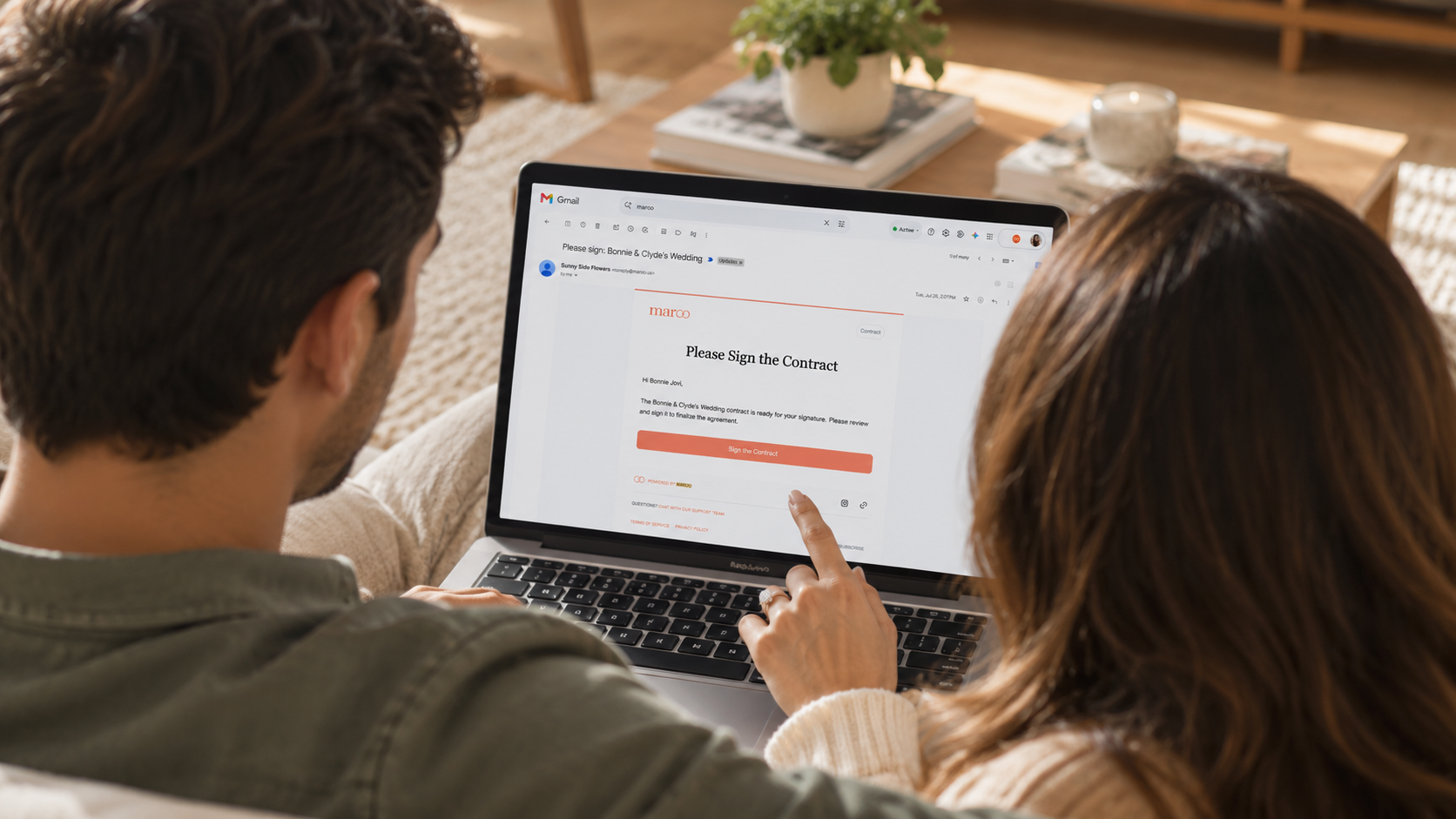
Speed is the obvious change. The quieter one is that the inquiry that landed during your call no longer sits in your head for the next hour. It's been handled, and the personal reply is a task for later instead of a small emergency now.
Open your sent folder and find the last five first replies you wrote to inquiries. Copy the sentences that appear in all five. That's your template. Save it in Maroo, hook it to a "lead submitted" workflow, and set the wait to whatever your market expects. Then reply personally to every inquiry when you're actually at your desk, knowing the couple already knows you're real.
If you don't have a lead form feeding a pipeline yet, that's the first piece to put in place, and Maroo is free to start.