
A wedding photographer was doing everything right creatively. Great portfolio, consistent bookings, referrals coming in. But behind the scenes, she was drowning. Every inquiry got a custom-typed email. Every follow-up, handwritten. Every timeline confirmation, built from scratch. When a colleague asked why she hadn't set up a repeatable workflow, she said she didn't have time to figure it out. She had 100 emails to write.
That's the trap. You're too busy doing the thing to fix the thing that's making you too busy.
Her colleague had been using a CRM for years and was handling the same inquiry volume in a fraction of the time. New inquiries landed in a pipeline, repeatable checkpoints kept follow-up visible, questionnaires gathered the right details, and contract and payment reminders covered defined transactional moments. The personal messages still sounded like her, but the workflow made every next step clear.
When she finally set up similar systems, her booking rate went up. Not because her work got better. Because she was responding faster and following up more consistently.
A Harvard Business Review study found that the average business takes 42 hours to respond to a new lead. That's almost two full days. Meanwhile, leads contacted within five minutes are 21 times more likely to convert. The same research found that 78% of customers buy from the first company to respond.
In the wedding industry, couples contact an average of 14 vendors during their planning process. If you take two days to reply, you're not just slow. You're invisible. Someone else already booked them.
That's what makes a lead capture and response system so valuable. It's not about replacing the personal touch. It's about making sure the personal touch happens fast enough to matter.
When a couple fills out a contact form on your website, Maroo's lead capture pulls that inquiry into a pipeline. Within the lead record, you can review details, assign ownership, update the status, add notes, and send a direct email. From there, prepare pricing, a contract, and a payment schedule as the inquiry becomes a booked client. The couple can review, sign, and pay through connected steps.
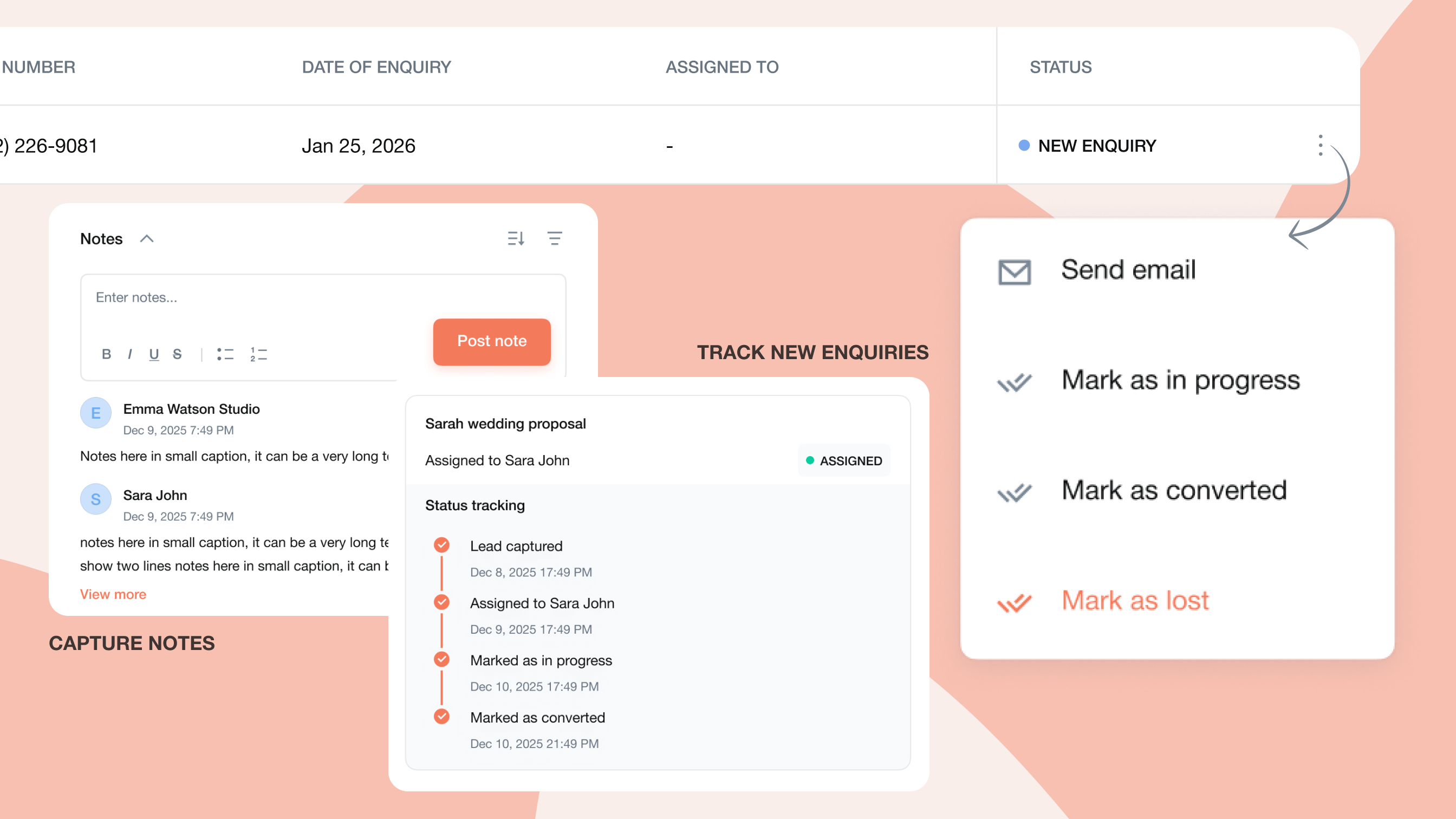
Maroo's CRM brings lead intake, pipeline status, notes, documents, and the path to payment into one connected view. Reusable questionnaires collect structured client details, while contract and payment reminders handle defined follow-ups. Your custom nurture copy can stay in the email system you already use.
Maroo is expanding these communication workflows quickly. The current setup already gives you a clearer source of truth and fewer repetitive handoffs, while keeping the personal message in your voice.
That is time you can spend shooting, editing, serving clients, or simply not working at 11 PM on a Tuesday.