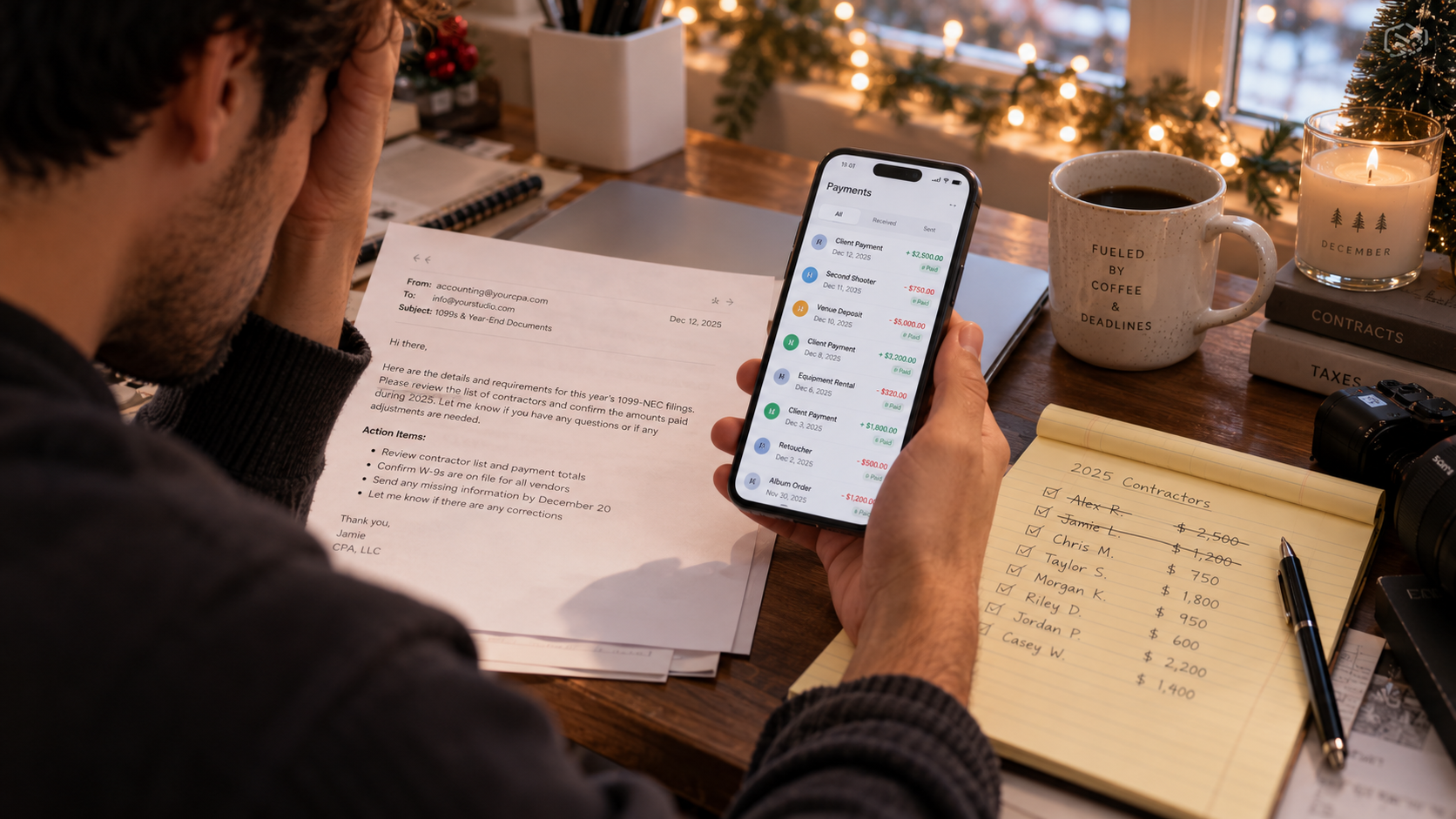
It's a Tuesday, eighteen days before a Saturday wedding. The couple's second payment was due Friday. It hasn't come in, and the florist just emailed: the order has to go in by Thursday or the flowers won't arrive in time.
The florist doesn't know the couple. Their agreement is with the venue. So the venue owner does what a lot of good owners do. They pay the florist out of their own account and start chasing the couple.
It's easy to call this a mistake. It isn't, exactly. Owners who do it have thought it through. The couple will almost certainly pay; they probably just got distracted. Vendors who get paid on time keep coming back and keep recommending the venue. And a vendor who wonders whether their money is safe at your property is a vendor who quietly stops taking your bookings.

The problem is scale. One fronted florist order is a favor. A season of them is a venue acting as an interest-free lender. And the pattern is common. The 2025 Intuit QuickBooks Late Payments Report found 47% of small businesses had invoices more than 30 days overdue. Businesses hit hardest by late payments were 1.4 times more likely to report cash-flow problems than those with fewer delays.
Weddings make it worse. Vendor costs are fixed to a calendar that doesn't move. The flowers have to be ordered by a date. The linens have to be pulled by a date. The couple's payment, meanwhile, arrives whenever they remember.
The fix is mostly about when money is due, not how hard you chase it.
Call before you email. A short, friendly call two days after a missed milestone ("Just checking the payment went through, the florist order closes Thursday") fixes most of these on the spot. It also tells you whether you have a forgetful couple or a couple in trouble, and those need very different responses.
If it's the second kind, find out early. Can part of the balance move to a later milestone? Can the package shrink? A couple who downgrades the floral package three weeks out is a much better outcome than a couple who cancels the week of, or one who pays the final balance with a chargeback.
Whatever you agree, put it in writing and update the payment schedule so the new dates send their own reminders.
Reminders matter more than they sound. Most late payments aren't refusals. They're couples juggling thirteen vendors who forgot which one was due this week. For more on why clients pay late and what actually changes it, see what creative businesses learned about getting paid.
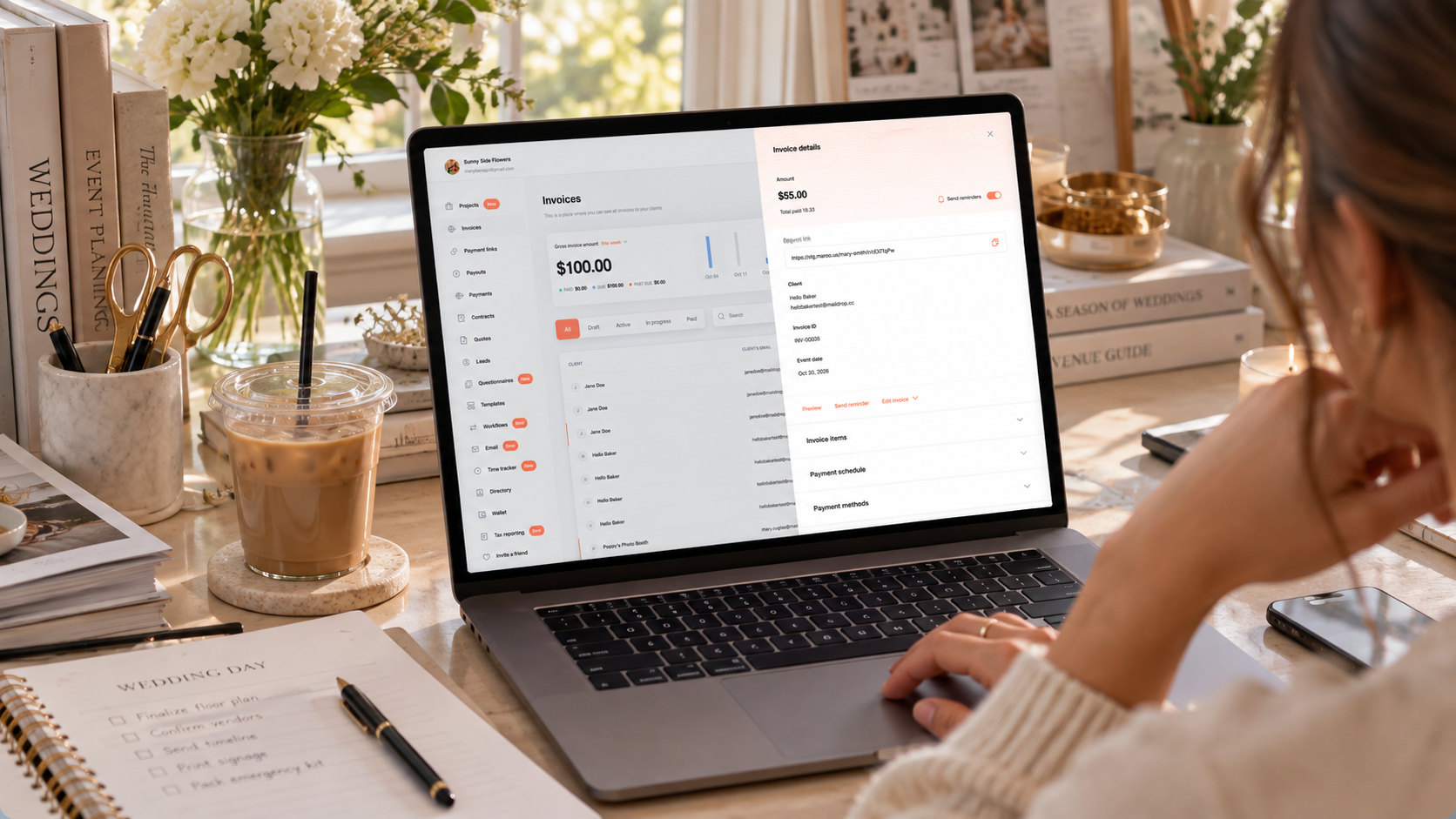
This is where Maroo helps. Its invoicing lets you set a payment schedule on each booking (deposit, midpoints, add-ons, final balance) and sends automatic reminders ahead of each due date, so nobody has to remember to nudge the couple. Couples pay online by card or bank transfer without creating an account, and ACH and debit payments carry zero processing fees. You can see at a glance which bookings are paid up and which are behind, weeks before event day.
When you do pay the florist, you pay from the same place. You keep the vendor relationship, and you're not financing the wedding to do it.
The takeaway: pull your next three bookings, list every vendor payment date, and move the couple's milestones at least 30 days ahead of each one.