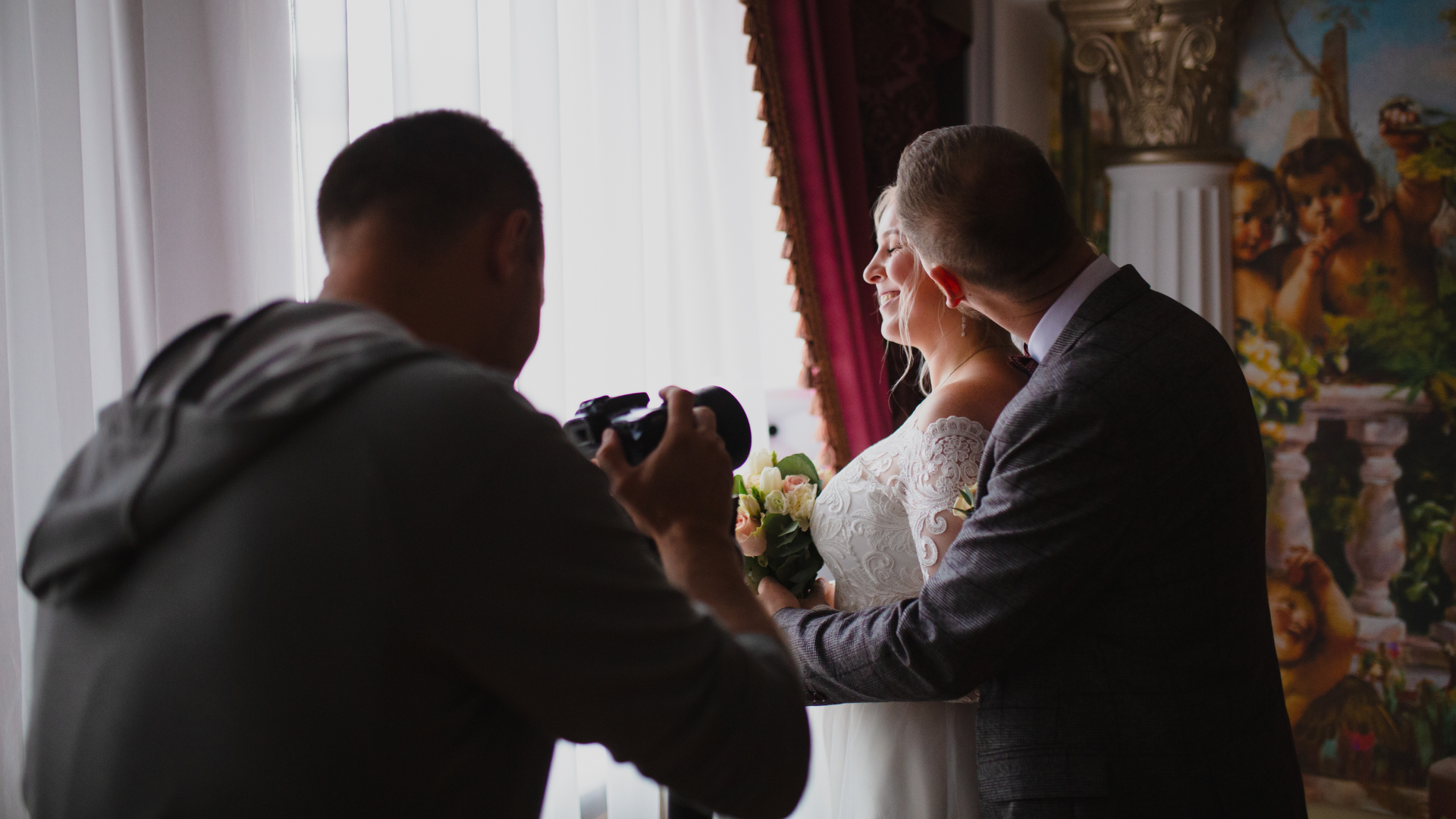
Two photographers went full-time within months of each other. They took completely different paths to get there.
The first one worked in a studio for six years. She started as a sales associate handling client timelines and album design, then moved into second shooting, then lead shooting. She built her own client base on the side by booking weddings on dates the studio didn't need her. Gradually, she reduced her studio schedule and increased her own bookings until she was ready to walk away.
The second one worked a corporate desk job for eight years. He'd been shooting weddings on weekends since 2012, doubling his booking count every couple of years. One, two, four, eight, twelve, fifteen. He knew exactly what his corporate paycheck netted him biweekly. He asked himself a simple question: can my photography income match that number twice a month?
When the answer was yes, he gave notice.
Both of them went full-time right before the pandemic hit. Both of their partners lost their jobs during lockdown. Photography was the only household income keeping things afloat. And both survived because the business was already built.
According to Hostinger's side hustle data, 20% of side hustlers aim to transition to full-time, but the average side hustle generates only $891 per month. That's not enough to replace a salary. The gap between wanting to go full-time and being ready to go full-time is the gap between hope and a financial plan.
The photographer who made it work had a formula. He tallied his monthly expenses: rent, car payment, insurance, groceries, the minimum he needed to survive. Then he added his business expenses: gear, software subscriptions, insurance, second shooter costs. The sum was his monthly nut. If his wedding bookings covered that number for the next six months, he was safe to jump.
For the studio photographer, the math was different but the logic was the same. She compared her W-2 income to what she could earn independently. She was shooting 80 to 100 weddings a year for the studio and barely scraping by. Going independent with 20 to 30 weddings at her own rates would net her more. The math told her to go.
The transition is easier when you can see exactly what your business brings in each month. Not a rough estimate. Not an end-of-year tally. A real-time view of booked revenue, collected payments, and outstanding invoices.
With Maroo's invoicing and payment tracking, every booking shows up as a line item with a payment schedule attached. You can see what's been collected, what's pending, and what's coming in next month. When you're deciding whether to leave a steady paycheck, that visibility is the difference between a gut feeling and a data-backed decision.
The wedding industry generates $66 billion in annual spending across 2 million weddings. There's room. But room doesn't mean safety. Safety comes from knowing your number, building to it while you still have a paycheck, and jumping only when the math says you can.
Don't romanticize the leap. Just do the math. If the number works, go. If it doesn't, keep building until it does.