A couple falls in love with a venue. The sales manager mentions an on-site coordinator is included. The couple breathes a sigh of relief and crosses "hire a planner" off the list.
Then the wedding morning arrives. The bridal party is getting ready in a suite upstairs, but nobody is there to keep the timeline moving. The ceremony site across the property has chairs set up, but the arch is in the wrong spot and the sound system has not been tested. The florist delivered centerpieces to the loading dock, but no one told her which tables get which arrangement. Meanwhile, the venue coordinator is in the kitchen, confirming the plated dinner count and making sure the bar is stocked.
That coordinator is doing her job perfectly. Her job is food and beverage, room setup according to the contract, and making sure the venue runs. She is not directing your bridal party, managing your photographer's shot list, or noticing that the boutonnieres are pinned on the wrong side. That has never been her job. But nobody explained that to the couple.

This is the single most common misunderstanding in the wedding industry. A venue coordinator manages the venue. A day-of coordinator manages the wedding day. A full-service planner manages everything from engagement to exit. Three different scopes. Three different price points. And when a couple only has one of the three, the other two roles just do not get done.
For planners, this is where clear communication saves everything. When you send a proposal that spells out exactly what falls under your scope -- and, just as honestly, what does not -- you eliminate the morning-of confusion before it starts. Maroo's proposal tools let you build tiered packages where clients can see, line by line, the difference between venue coordination, day-of management, and full-service planning. No ambiguity. No assumptions.
A seasoned planner once described the difference between her service tiers this way: "A day-of package is about 50 tasks. Full planning is 150. And the client thinks both are the same thing because the word 'planner' is in both titles."
The 50-task version starts roughly six weeks before the wedding. You inherit whatever decisions the couple has already made -- some good, some questionable, some completely undocumented. You build a timeline, confirm vendors, do a walkthrough, and run the day.
The 150-task version starts months out. Venue research. Vendor interviews. Budget tracking. Design development. Tastings. Stationery timelines. Linen sourcing. Rental orders with delivery windows that have to sync with a setup crew working two other events that day. Every task spawns three more.
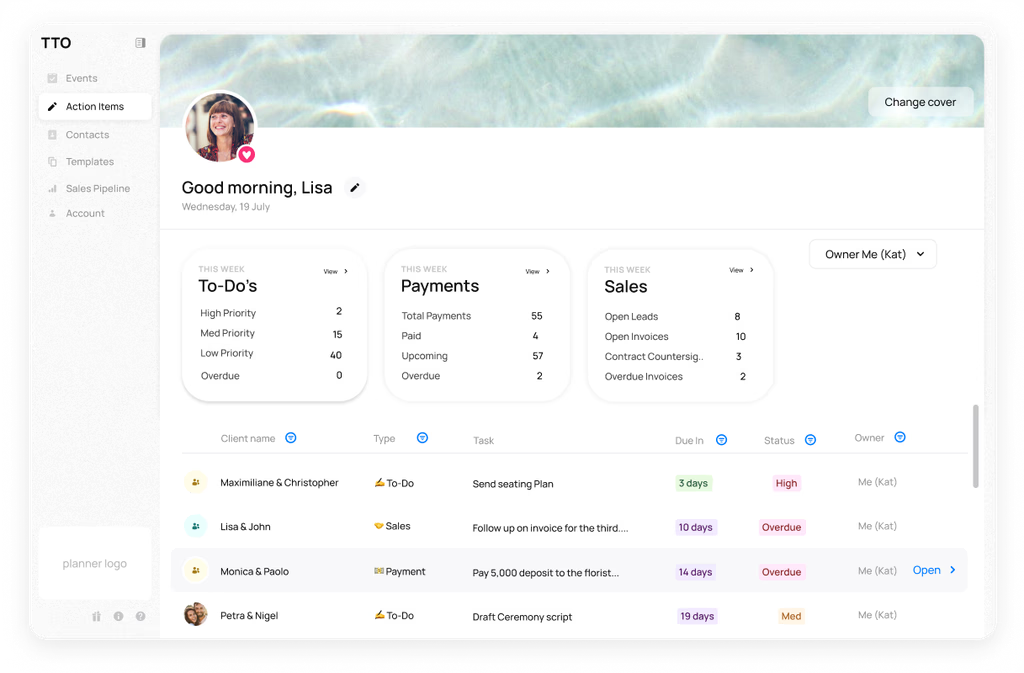
The planners who handle this well have systems that auto-generate deadlines based on the wedding date. Task management and timeline templates through tools like That's The One give planners a framework where every milestone has a date and nothing gets buried. When you pair that with Maroo's proposal system, you can show clients exactly what 150 tasks looks like compared to 50.
It is a Tuesday at 11:14pm. Your phone buzzes. A bride six weeks out from her wedding has just seen a photo on social media of a tablecloth color she now hates -- the same color she chose four months ago.
If you do not have boundaries, this is every night. Not always linens. Sometimes it is a seating chart crisis triggered by a family argument. Sometimes it is a 6am voicemail about escort card fonts. The pattern does not change: without a system that creates structure around client communication, your personal time disappears.
The planners who last in this business are the ones who set expectations early and route communication through channels that keep everything documented. A proper CRM is not just a contact list -- it is the boundary itself.
Maroo's free CRM gives planners a single place to capture leads, track every client interaction, and keep communication organized without paying for a separate tool.
Venue weddings come with infrastructure. Kitchens, restrooms, parking, power outlets, a roof. Private estate weddings come with grass and a dream.
One coordinator described a backyard wedding where her pre-event checklist included confirming the homeowner had turned off the automated sprinkler system. She had learned that lesson the hard way at a previous event, where sprinklers kicked on during setup and soaked a half-dressed reception area.
Then there are the actual logistics. Tent rental. Table and chair delivery from a different company. A generator for power. Portable restrooms. A caterer working out of a mobile kitchen parked in the driveway. A lighting crew that needs three hours of setup time but cannot start until the tent is up.
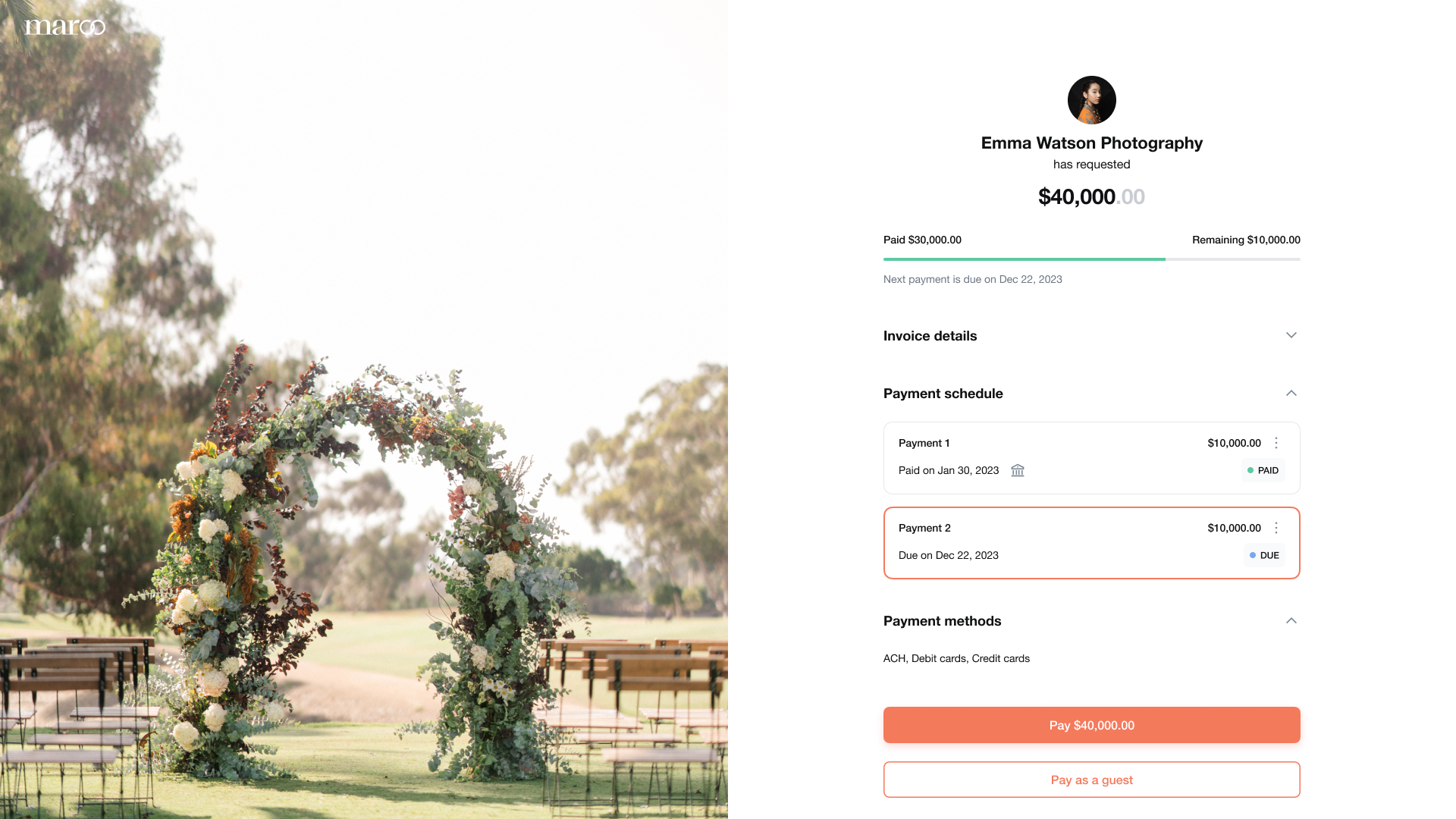
Every one of those vendors gets an invoice. The planner is often managing this payment flow -- collecting from the client, paying out to vendors, tracking what has been paid. Maroo's invoicing and bill pay tools let planners send invoices with automated reminders and pay vendors directly from the same platform. And for complex estate weddings, floor plan tools in That's The One let you map tent placement, table layouts, and vendor access points before anyone sets foot on the property.
There is a management style some planners fall into early in their careers: control everything. Build the timeline yourself. Tell the photographer where to stand. Dictate the caterer's service flow.
Except a photographer who has shot 200 weddings knows something about golden hour timing that you might not. A caterer who has worked that venue twelve times knows the kitchen bottleneck. The planners who get the best results are the ones who build collaborative timelines -- they share the plan, invite input, and let specialists own their segments.
Shared timelines and vendor collaboration through That's The One make this possible without email chains nobody reads. And Maroo's team management features keep the financial and operational side organized.
Wedding planning is one of the few professions where success means nobody notices you did anything. The couple remembers the first dance, the toasts, the moment the doors opened. They do not remember the planner re-routing the shuttle or catching the wrong linens at 7am.

If you are a planner reading this, the best thing you can do is make the invisible visible -- in your proposals, your onboarding, your communication. Show clients what 150 tasks looks like. The couples who understand what you do will value what you charge.