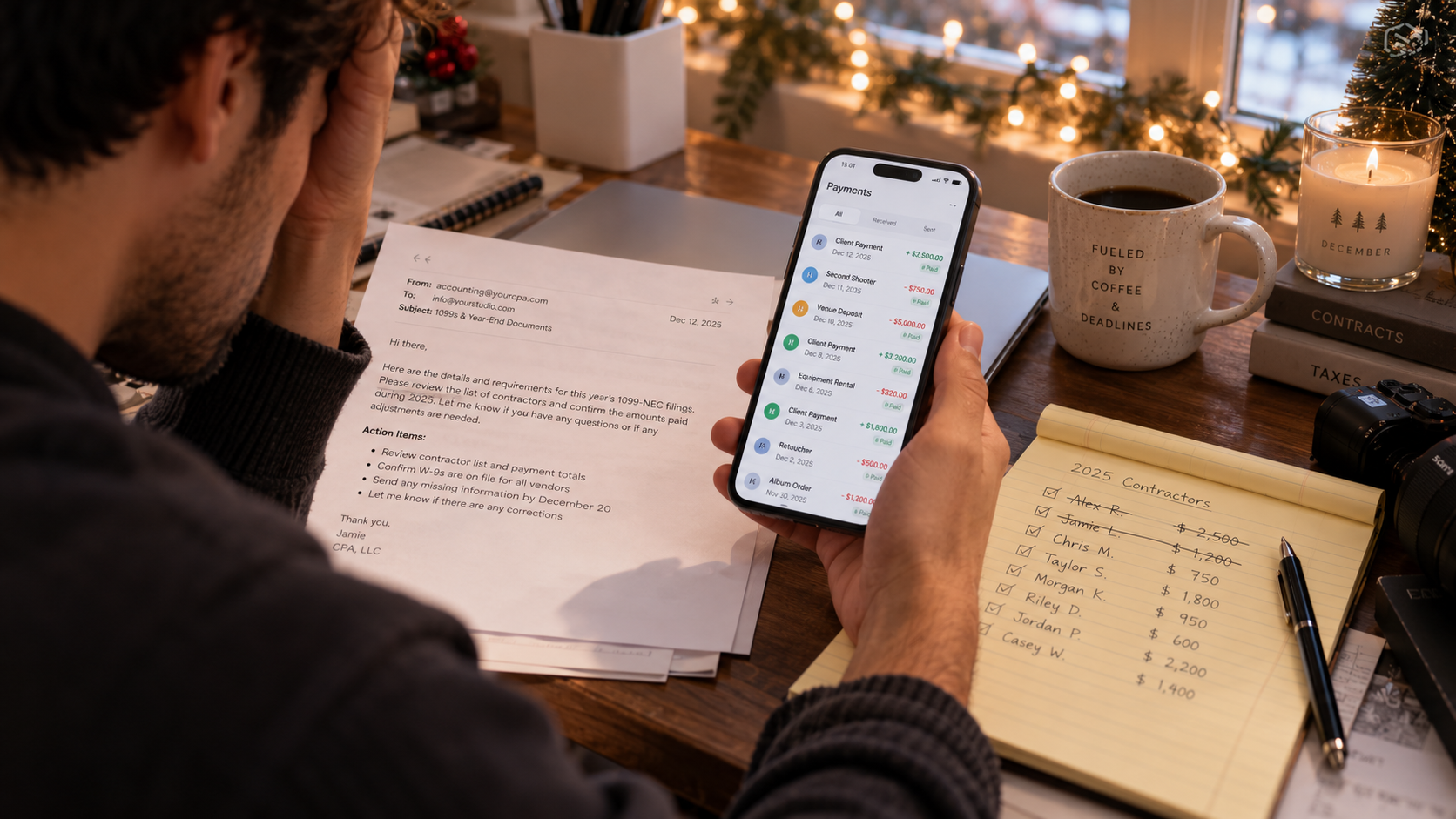
Maroo and Planning Pod overlap in CRM, contracts, invoices, and payments, but their operational centers are different. Maroo focuses on wedding and event client finances plus contractor administration. Planning Pod focuses on venue and catering operations, including booking calendars, floor plans, BEOs, food and beverage, and workflows.
A solo professional, small studio, venue, and multi-location hospitality group will weigh those differences differently. The correct choice starts with the operating model, not a universal feature ranking.
This comparison uses official sources checked August 21, 2026. Prices, processing terms, integrations, and feature availability can change, so confirm the linked pages and exact quote before deciding.
Start with the type and volume of events the business manages, the documents it produces, and whether it pays contractors.
Maroo serves wedding and event businesses that need a free CRM/core workflow, quotes, contracts, invoices, client payments, contractor payouts, and related tax-document administration.
Planning Pod's venue and catering product connects leads, bookings, BEOs, catering orders, invoices, and payments with space, floor-plan, food-and-beverage, and team operations.
In short: Maroo is a focused client-financial and contractor platform; Planning Pod is a broader venue-operations platform. Either can fit outside that shorthand when the actual workflow matches.
Maroo's Starter CRM and associated core features are free for businesses invoicing under $5,000 per month within published limits. It connects client records to quotes, contracts, invoices, and payment status.
A Maroo Project keeps a client’s contacts, documents, files and notes together. Start from scratch or create it from one eligible existing lead, quote, contract or invoice, then connect other records as needed. Watch the Maroo Projects walkthrough. For shared work, review team roles and permissions: Admin, Member and View Only provide starting presets, with view and create/edit access configurable for supported modules.
Planning Pod provides a venue-oriented CRM with lead capture, pipeline tools, booking availability, proposals, client communication, and workflows. That can fit a team selling and delivering multiple spaces or events.
Fit: Planning Pod offers greater venue-sales and operations depth; Maroo offers a focused, free entry point for client-financial work.
Maroo publishes contracts and e-signatures with plan-specific limits and per-use terms. Starter charges per contract, Business includes a monthly allotment, and Pro has the largest published limits.
Planning Pod connects proposals, contracts, signatures, invoices, BEOs, and event records. A venue that needs operational documents generated from the same booking data may value that breadth.
Fit: compare contract volume and the surrounding document workflow, not signing alone.
Maroo's invoicing supports one-time invoices, installments, reminders, and published recurring invoices. Recurring invoices are distinct from installments and Autopay.
Planning Pod supports proposals, invoices, installments, automated reminders, and integrated processors. Its payment setup guide lists PaySimple, Stripe, Square, QuickBooks Payments, and Authorize.net arrangements, with processor-specific rates and terms.
Planning Pod includes space and room management plus to-scale floor-plan tools. Those features connect venue availability and event setup to the operating record.
Maroo does not position itself as a floor-plan, seating-layout, or room-inventory product. A business that needs those tools should retain a dedicated planning or venue system.
Planning Pod includes BEO and food-and-beverage tools that can share booking, menu, headcount, schedule, and setup details across teams.
Maroo does not publish a BEO or food-and-beverage operations module.
Maroo supports B2B ACH contractor payouts within plan limits, individual and bulk W-9 requests, and published 1099 preparation, e-filing, and mailing options.
Planning Pod's current public venue and payment pages focus on client payments and event operations; they do not present the same connected contractor payout plus W-9/1099 workflow.
Maroo provides client-financial reporting tied to invoices, payments, and related records, with plan-specific capabilities.
Planning Pod provides event- and venue-oriented dashboards and customizable reporting across bookings, leads, budgets, proposals, invoices, payments, schedules, and operations.
Planning Pod pricing is currently based on event volume, and its public site says most single-location venues land between $199 and $319 per month. Exact subscription and processor cost requires a quote and payment-account terms.
Planning Pod's integrated processors deduct their fees from transactions. Its help center also documents configurable additional fees, including service charges. Businesses should not assume that feature is an automatic card-fee pass; they should confirm the setup, disclosure, processor rules, and applicable law.
Maroo publishes client card and ACH rates by plan. If a Business-plan user passes every eligible processing fee and absorbs no other transaction fee, its business-side cost is only the $50 monthly subscription, or $600 per year; clients pay the shifted eligible fees. Passing shifts the fee and does not eliminate it.
The total cost comparison therefore needs the Planning Pod quote, processor, payment mix, service-charge configuration, Maroo plan, who absorbs eligible fees, and any per-use charges.
Planning Pod's value may come from replacing separate venue, floor-plan, BEO, catering, CRM, and workflow tools. Maroo's value may come from a focused financial workflow and connected contractor records.
Maroo does not publish a full venue-operations suite.
Planning Pod is the stronger fit when BEOs, food and beverage, floor plans, room inventory, venue availability, ticketing, or deep operational workflows are essential.
Maroo now supports reusable Questionnaires, but it should not be described as matching Planning Pod's venue and catering depth. Wedding planners can also pair Maroo's business-side workflow with ThatsTheOne at $61/month for planning-side budgets, timelines, vendors, guests, and collaboration.
Planning Pod's current public scope does not show the same connected contractor and tax-document workflow as Maroo.
- No connected W-9 request plus published 1099 filing workflow shown
- No Maroo-style free Starter CRM/core plan
- Exact subscription requires event-volume quote
- Processor and service-charge configuration must be modeled
- API and integration access should be confirmed for the required workflow
A venue with employees and no contractor workflow may not value Maroo's differentiation. A planner or studio that regularly pays freelancers may value it substantially.
- A wedding or event business that wants a free Starter CRM and associated core features within limits
- Focused on quotes, contracts, invoices, payments, and contractor records
- Paying contractors and needing W-9 requests plus published 1099 options
- Evaluating the qualified Business scenario where passing every eligible fee leaves a $600 subscription cost over 12 monthly payments
- Using published QuickBooks, Zapier, Make, or API options on applicable plans
- A venue, caterer, hotel, restaurant, museum, or event operator managing multiple bookings
- Producing BEOs and food-and-beverage documents
- Managing rooms, availability, floor plans, equipment, or catering operations
- Running a venue sales pipeline tied to booking inventory
- Willing to obtain an event-volume quote and configure an integrated processor
A venue could use Planning Pod for operational execution and Maroo for selected client-financial or contractor workflows. Both publish Zapier connectivity, but a two-system stack needs an explicit system of record for contacts, contracts, invoices, payment status, events, and contractors. See Planning Pod's Zapier guide before assuming a specific sync is available.
Is Maroo's CRM free? Yes. Starter's CRM and associated core features are free for businesses invoicing under $5,000 per month within published limits. Processing, contracts, tax documents, and other per-use charges can still apply.
What does Planning Pod cost? The current public site says pricing is based on event volume and most single-location venues land between $199 and $319 per month. Request the exact monthly or annual quote for the venue.
Can Planning Pod add client-facing fees? Planning Pod documents percentage or fixed additional fees such as service charges on proposals and invoices. Confirm whether the desired setup is appropriate for payment-cost recovery under the processor, disclosure, card-network, and legal rules that apply.
Which platform fits a wedding venue? Planning Pod can fit venues that need floor plans, BEOs, catering, space inventory, and sales operations. Maroo can complement or replace only the narrower client-financial and contractor workflows it actually supports.
Which platform fits an independent planner? Maroo can fit planners who prioritize a free CRM/core workflow, contracts, invoices, payments, and contractor administration. Planning Pod can fit planners who need its broader event-operations suite.
Does Maroo have floor plans? No. Maroo does not publish floor-plan, event-design, or room-management tools.
Does Planning Pod provide Maroo's contractor and tax-document workflow? Its current public venue and help pages do not show the same connected payout, W-9 request, and 1099 preparation/e-filing/mailing workflow.
Can the products connect? Both publish Zapier options. The available triggers, actions, fields, plan requirements, and error handling should be tested with a real workflow.
Maroo and Planning Pod solve overlapping client-management needs from different operating centers.
Maroo can fit a wedding or event business that prioritizes a free Starter CRM/core workflow, client collections, qualified fee passing, contractor payouts, W-9 requests, and published 1099 options.
Planning Pod can fit a venue or catering operation that needs booking calendars, floor plans, BEOs, food and beverage, proposals, contracts, invoices, and operational workflows together.
Choose based on the real event record, payment model, contractor process, and operational documents the team must manage.
Review Maroo's current plans, payment terms, and QuickBooks integration.
Then request the current Planning Pod quote and walk one real lead-to-event-to-payment workflow through both products.