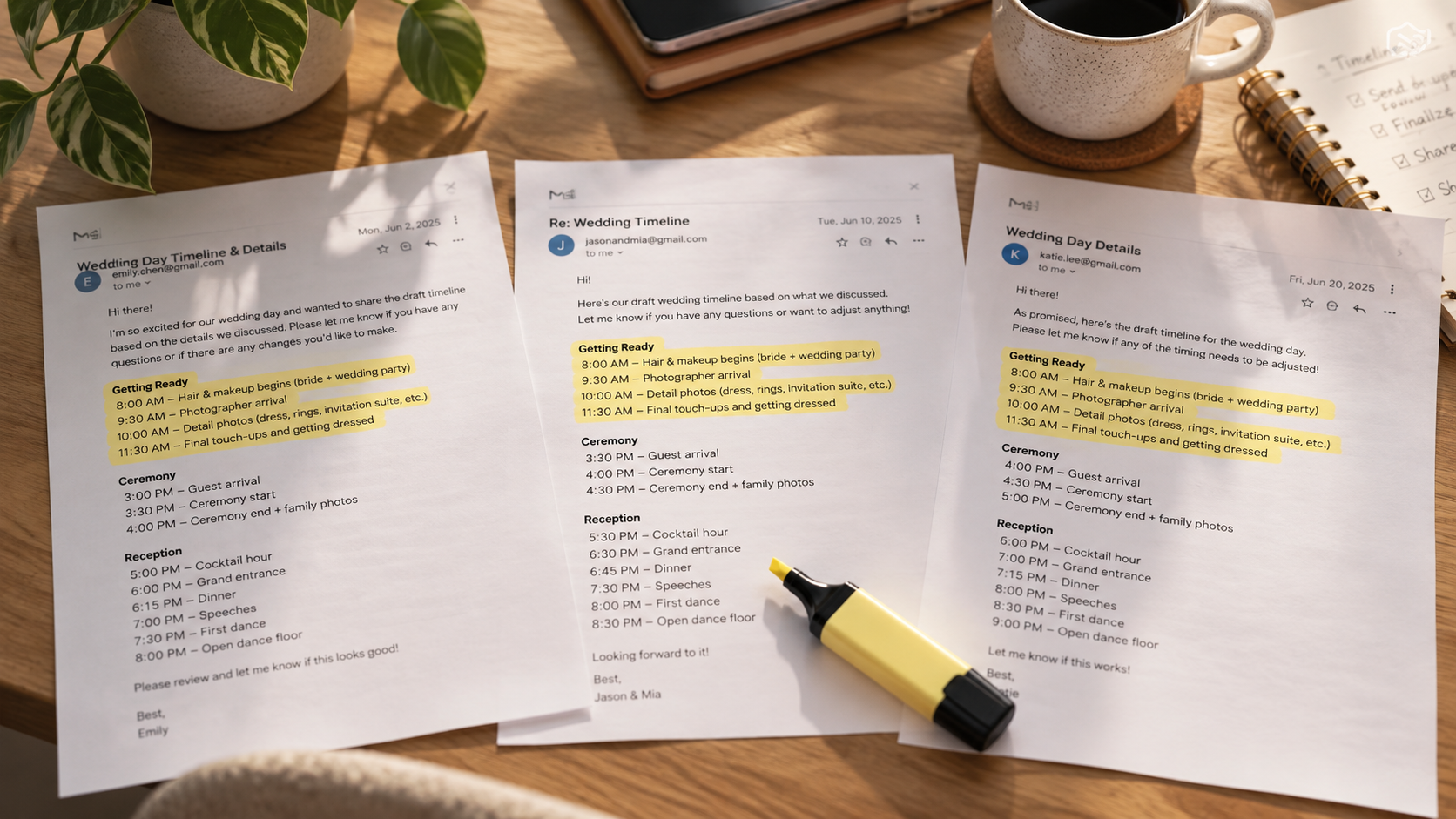
A couple skips the first look. They want the aisle moment. The photographer gets it -- the sentiment is real. But here's what that decision actually costs.
The window between ceremony and cocktail hour shrinks to thirty minutes. Maybe less. In that window, the photographer needs family photos, bridal party shots, couple portraits, and room details. Something gets cut. Maybe the big bridal party shot. Maybe the room. Maybe the portraits feel rushed.
The first look isn't about romance versus tradition. It's about time.
With a first look, the couple sees each other an hour or two before the ceremony. That window opens up time for couple portraits when the light is good, when the makeup is fresh, and when nobody's watching. The photographer can take their time. The couple can relax into it. By the time the ceremony happens, the portrait work is largely done.
Without a first look, every portrait has to happen in the gap between ceremony and reception. At a typical wedding, that gap is thirty to forty-five minutes. Subtract travel time between ceremony and portrait location. Subtract the inevitable five minutes of hugging and congratulations right after the ceremony. You're left with twenty to thirty minutes for everything.
One photographer described trying to shoot a twenty-five-person bridal party, extended family, bride alone, groom alone, and couple together in forty-five minutes. Solo. No second shooter. The result was rushed, the couple could feel it, and the gallery showed it. "Nobody can do this in forty-five minutes."
Fifty-six percent of couples now incorporate a first look, according to the Zola 2025 First Look Report. Forty-one percent also plan first looks with friends and family. The trend is moving toward first looks for practical reasons as much as emotional ones -- couples are realizing that it simply buys better photos.
If you skip the first look, you're not just losing portrait time. You're changing the energy of every photo taken after the ceremony. Post-ceremony portraits happen when the adrenaline is high, the schedule is tight, and everyone wants to get to cocktail hour. The couple is fielding congratulations from guests while trying to pose naturally. The photographer is watching the clock.
Compare that to a first look session where the couple has forty-five minutes of uninterrupted time with their photographer. No guests. No timeline pressure. The resulting images are almost always more relaxed, more natural, and more varied because there was time to experiment.
Seventy-eight percent of couples plan to exchange vows privately, which signals a broader shift. Couples are carving out private, intimate moments within the wedding day -- and a first look fits naturally into that trend.
The counterargument is real: some couples genuinely want the surprise of seeing each other at the altar for the first time. That's a valid choice. But it should be an informed choice, not one made without understanding the trade-offs.
Proposals that outline coverage differences between first-look and non-first-look timelines let the client see exactly what each choice means for their deliverables. A proposal that shows "with a first look, expect 80-100 couple portraits; without it, expect 20-30" isn't pushing an agenda. It's giving the couple the information they need to decide what matters most to them.
For photographers shooting micro weddings and intimate celebrations, the first look question is even more critical because the timeline is already compressed. Fewer guests doesn't always mean more time -- it often means a shorter event with less buffer built in.
If you're the photographer, your job isn't to make the choice for them. It's to make sure they understand what each choice means. Present the options. Show them what's achievable. And then deliver the best possible result within whatever they decide.
When a couple works with a photographer who collaborates well with the planner, the first look conversation happens early and involves everyone who needs to weigh in. The planner adjusts the schedule. The photographer adjusts the shot plan. The couple gets exactly what they expected -- because expectations were set clearly, months before the wedding day.
If you skip the first look, know exactly what you're trading for that aisle moment. Ask your photographer to spell it out. And if you're the photographer, spell it out before they have to ask.