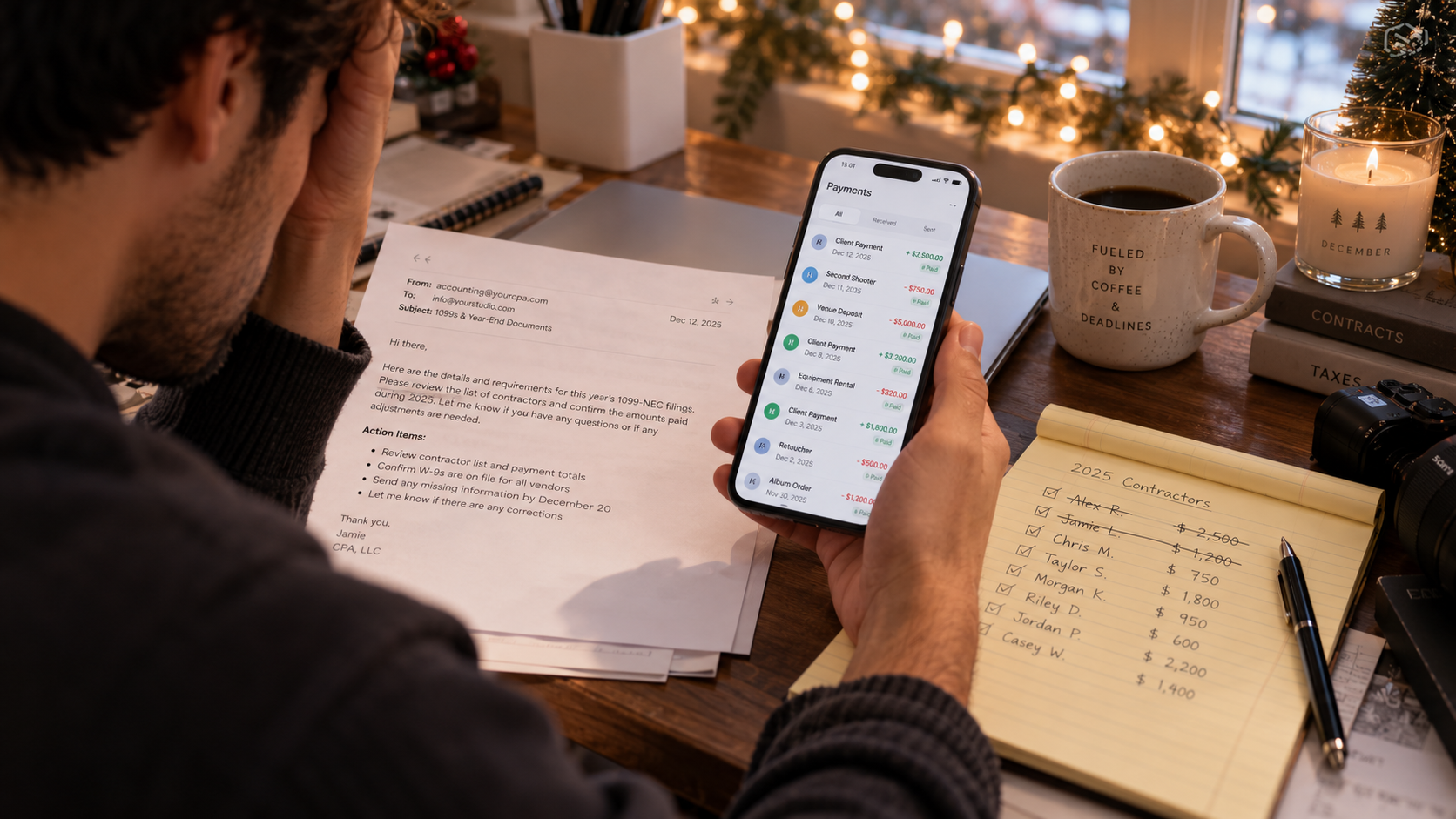
A business coach shared a stat during a workshop full of wedding vendors, and it stopped the room cold: 85% of the things you worry about never happen. Of the 15% that do, 80% turn out better than you expected.
Do the math. That's 97% of the time things work out fine.
The room went quiet. Then someone asked, "So why do I lose sleep every time I send a contract?" Good question.
You won't hire an associate because "what if they mess up a wedding?" You won't raise your prices because "what if nobody books?" You won't fire the nightmare client because "what if they leave a bad review?" You won't say no to a date that doesn't work for you because "what if I don't book anything else that month?"
Every one of those decisions is driven by a worst-case scenario that, statistically, almost never plays out. But the cost of making fear-based decisions is real. You stay solo when you should be growing. You stay cheap when your work deserves more. You stay miserable when you have the power to change things.
34% of solopreneurs have seriously considered abandoning their venture. That's not because the work is too hard. It's because the anxiety of running everything alone -- with no safety net, no backup plan, and no system to catch you if something goes wrong -- grinds people down.
And the thing about fear-based decisions is that they compound. You don't raise your prices this year, so you're undercharging next year too. You don't hire, so you cap your revenue again. You don't drop the nightmare client, so they drain your energy for another six months. Each avoided decision makes the next one harder.
Most vendor fear boils down to two things: "What if the client doesn't pay?" and "What if something goes wrong and I'm exposed?"
Both of those have structural solutions.
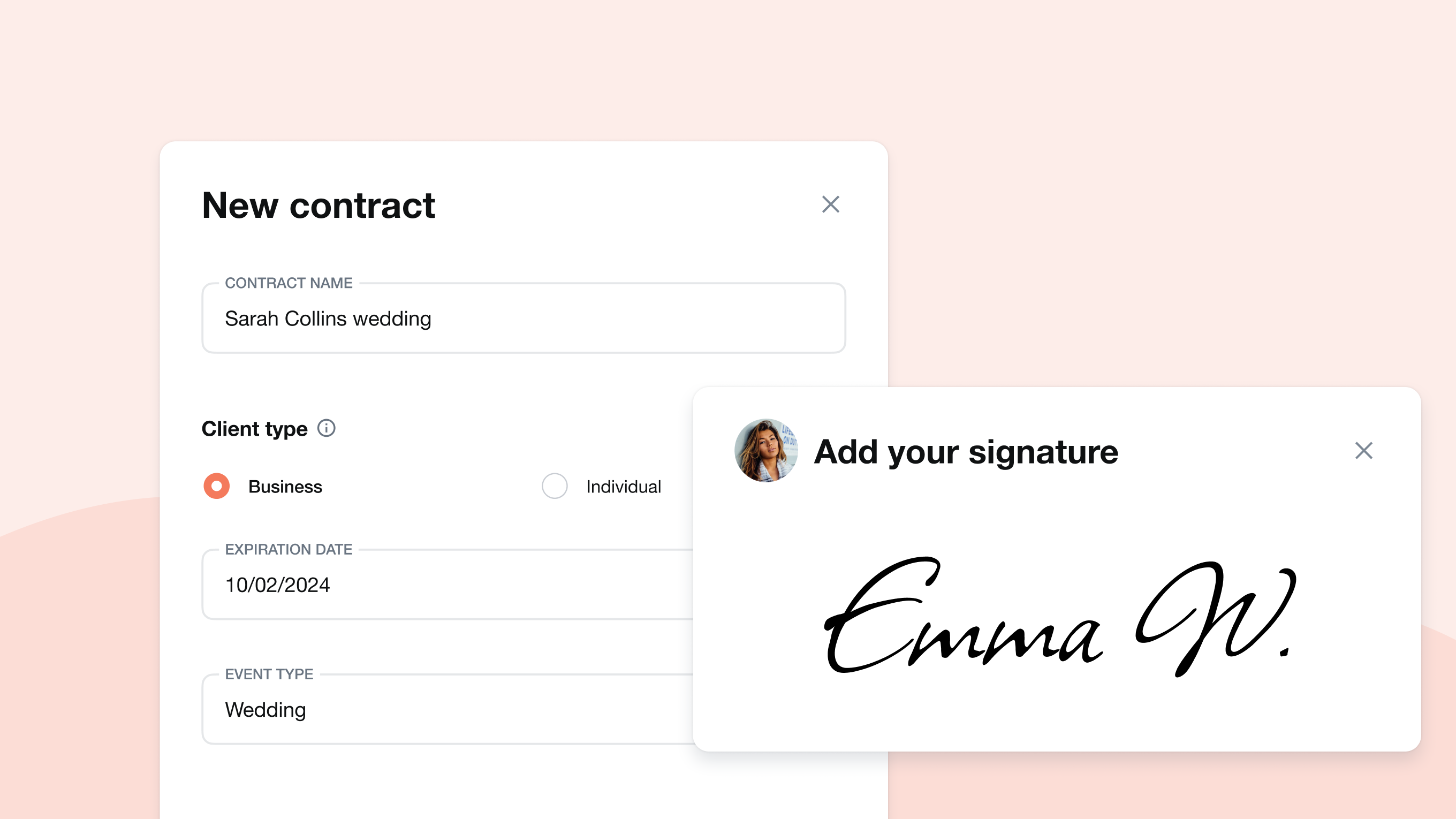
Contracts with clear cancellation terms and payment schedules reduce the "what if they don't pay" anxiety to nearly zero. When payment milestones are built into the agreement and collection is automated, you're not floating the full amount and hoping for the best. You're getting paid in stages, with terms that protect you if a client bails.
That's not a mindset fix. That's a business structure fix. And it works better than any amount of positive thinking. You don't need to believe everything will be fine. You need a contract that makes it fine regardless of what you believe.
The fear of raising prices is its own beast. Most vendors set their prices once and then agonize about changing them for years. But the math is straightforward: the national average wedding cost is $36,000, and 69% of couples exceed their original budget anyway. Your clients are spending money. The question is whether it's going to you or to someone else. If you haven't revisited your numbers recently, this pricing breakdown for wedding pros is a good place to start.
Next time you're stuck on a decision -- whether to hire, whether to raise prices, whether to drop a client who makes every interaction miserable -- run it through the 85% rule.
What's the worst case? Write it down. Actually write it down, not just in your head. Then ask: how likely is it, really? And if it did happen, would it actually be as catastrophic as it feels right now?
Almost always, the answer is no. The worst case is survivable. The likely case is fine. And the best case -- the one you never let yourself imagine because you're too busy catastrophizing -- is often pretty good.
A photographer who raised her prices by 30% lost two inquiries the first month and booked three at the higher rate. Net result: more money, fewer weddings, more time. The worst case she'd imagined -- nobody booking, her business collapsing -- was never close to happening.
Fear is a terrible business advisor. It keeps you small, keeps you cheap, and keeps you doing everything yourself because trusting anyone or anything else feels like a gamble. But the math says otherwise. 97% of the time, you'll be fine. Build your business like that's true, because it is.