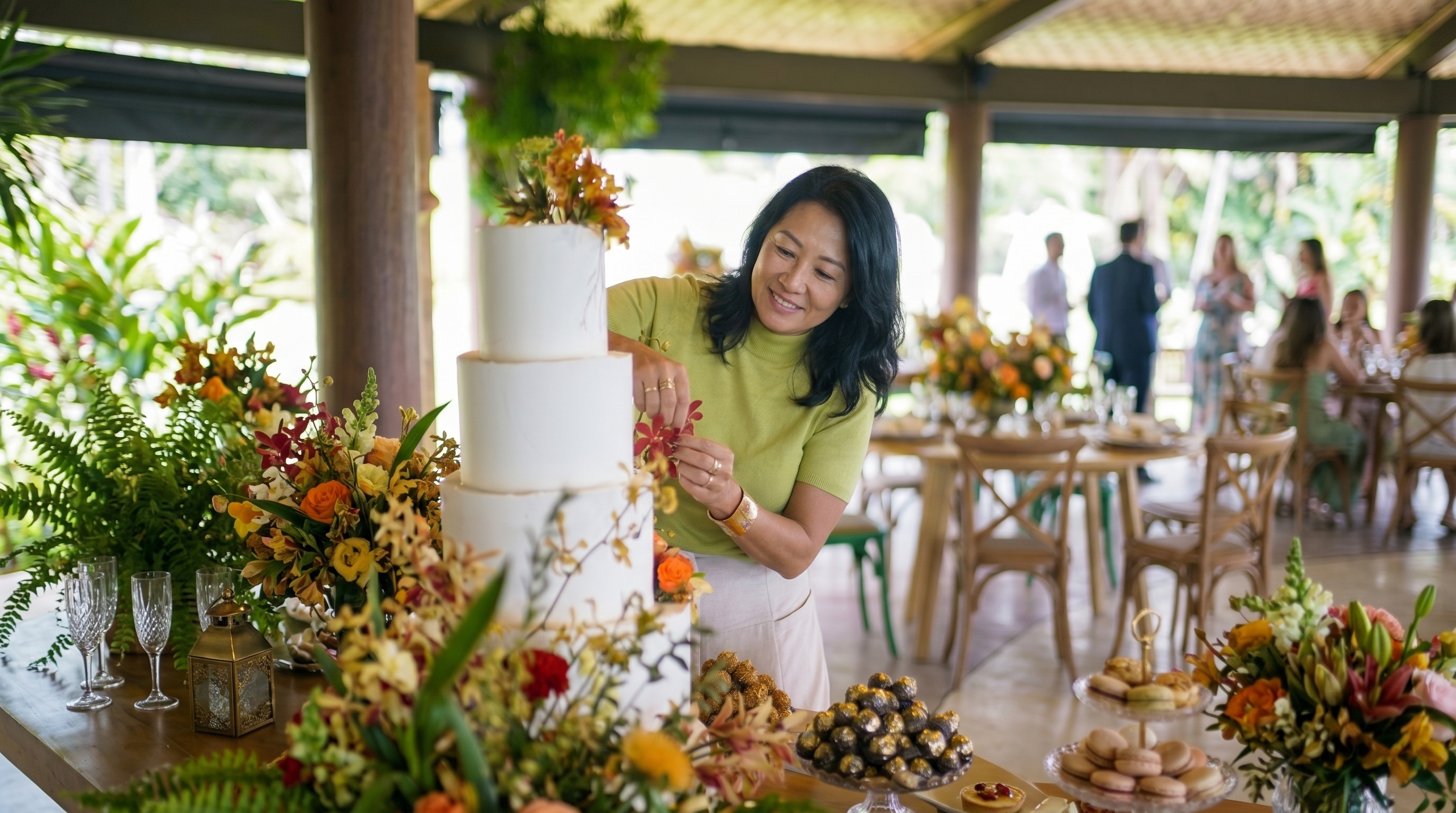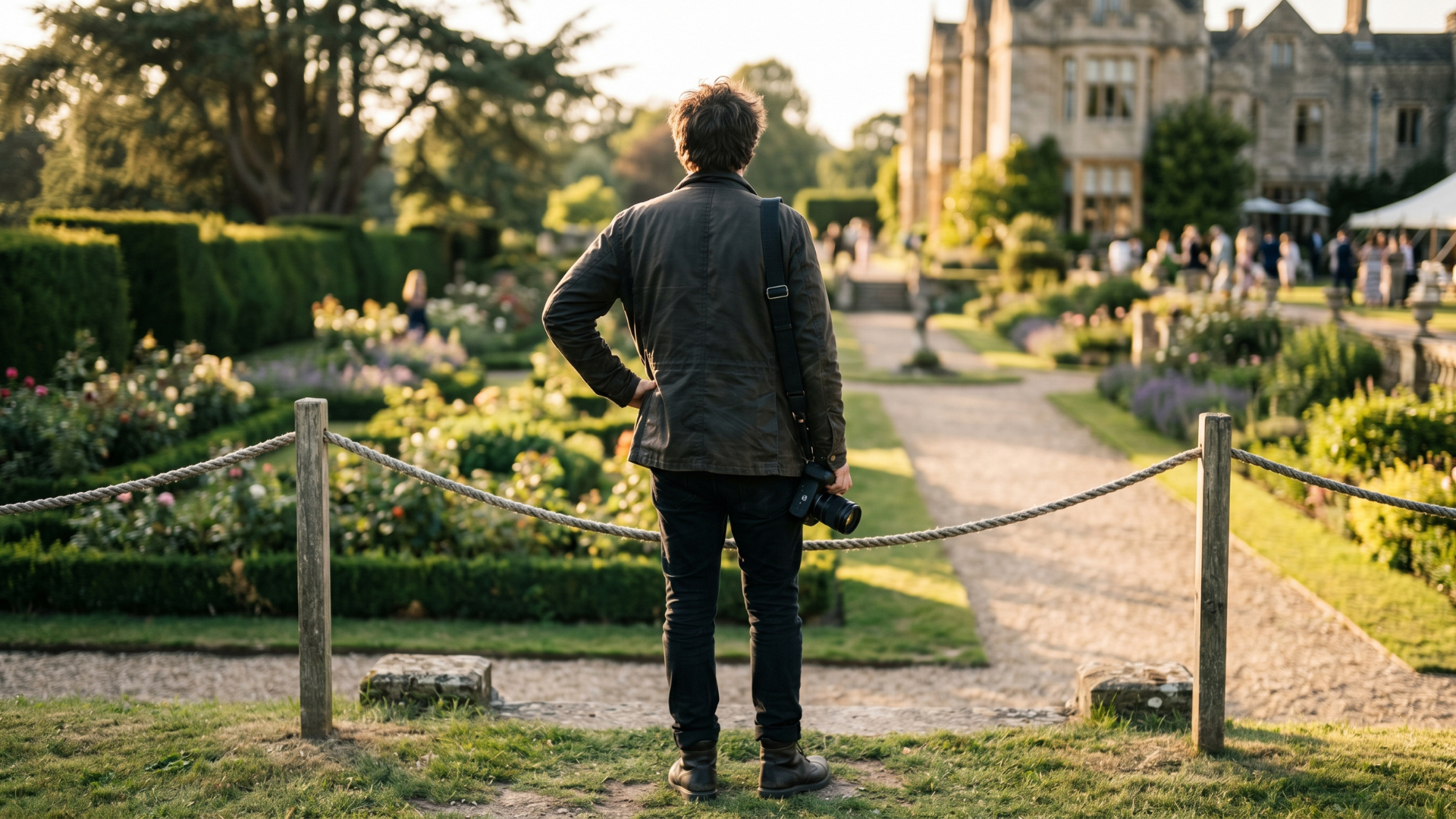
A photographer got married at a venue they loved. Full access to the grounds. Gardens in every direction. Multiple backdrops for portraits. They shot wherever they wanted, whenever they wanted. It was perfect.
Eight years later, they returned to the same venue -- this time as a hired photographer shooting someone else's wedding. The venue pointed them to a 25-foot square of grass. That was the designated photo area. The gardens they'd roamed freely on their own wedding day? Completely off-limits.
"Are you kidding me?" They weren't. The couple had no idea this would happen. They'd toured the venue, seen the grounds, imagined their portraits in those same gardens. Nobody mentioned that vendor access and couple access were two different things.
Roughly two-thirds of weddings now happen at outdoor venues -- gardens, barns, estates, lakefronts. The appeal is obvious. Natural beauty photographs well, guests love being outside, and the photos look nothing like a hotel ballroom.
But many of these beautiful outdoor venues run multiple events on the same day. Two weddings. Sometimes three. The venue spaces out start times, assigns different areas of the property to different parties, and enforces one strict rule: brides don't cross paths.
That sounds thoughtful. In practice, it means your photographer might be locked out of the best locations on the property because another wedding has priority. The rolling lawn you fell in love with during the tour? Currently occupied by wedding number two's ceremony. The garden arbor in every marketing photo? Unavailable until 4pm, and your ceremony starts at 3.
The venue isn't hiding this information maliciously. They're running a business, and multiple events per day is how the economics work. But the disconnect between what couples see during a Tuesday afternoon tour and what actually happens on a packed Saturday is significant.
When a photographer's access gets restricted, the impact cascades through your entire wedding gallery. Fewer backdrop options means less variety. Cramped shooting areas mean more similar-looking shots. Time restrictions mean rushing through portraits that should feel relaxed.
This is especially frustrating because couples choose outdoor venues largely for the photo opportunities. You're paying a premium for that garden, that view, that landscape. If your photographer can't access it, the premium doesn't shrink -- only the results do.
Before you sign with any venue, ask one question in writing: "Will my photographer have full access to all grounds on my wedding day, even if other events are happening simultaneously?"
Get the answer in writing too. Not a verbal "oh, of course" during the tour. In the contract. Specify which areas your photographer can use, during which time windows, and whether any other events could limit access.
If you're a vendor, build this into your process. Your contract should include clauses about venue access expectations. If a venue restricts your shooting area after the couple has signed, that's a problem you want documented -- not discovered on the wedding day.
Experienced photographers know which venues play nice and which ones don't. If you're shopping for a venue and your photographer hesitates when you mention a name, pay attention. That hesitation is worth more than any review. 73% of couples rely on reviews when choosing vendors, but reviews rarely mention the photographer getting corralled into a corner.
The venue sold you the whole property. Make sure your contract delivers it.