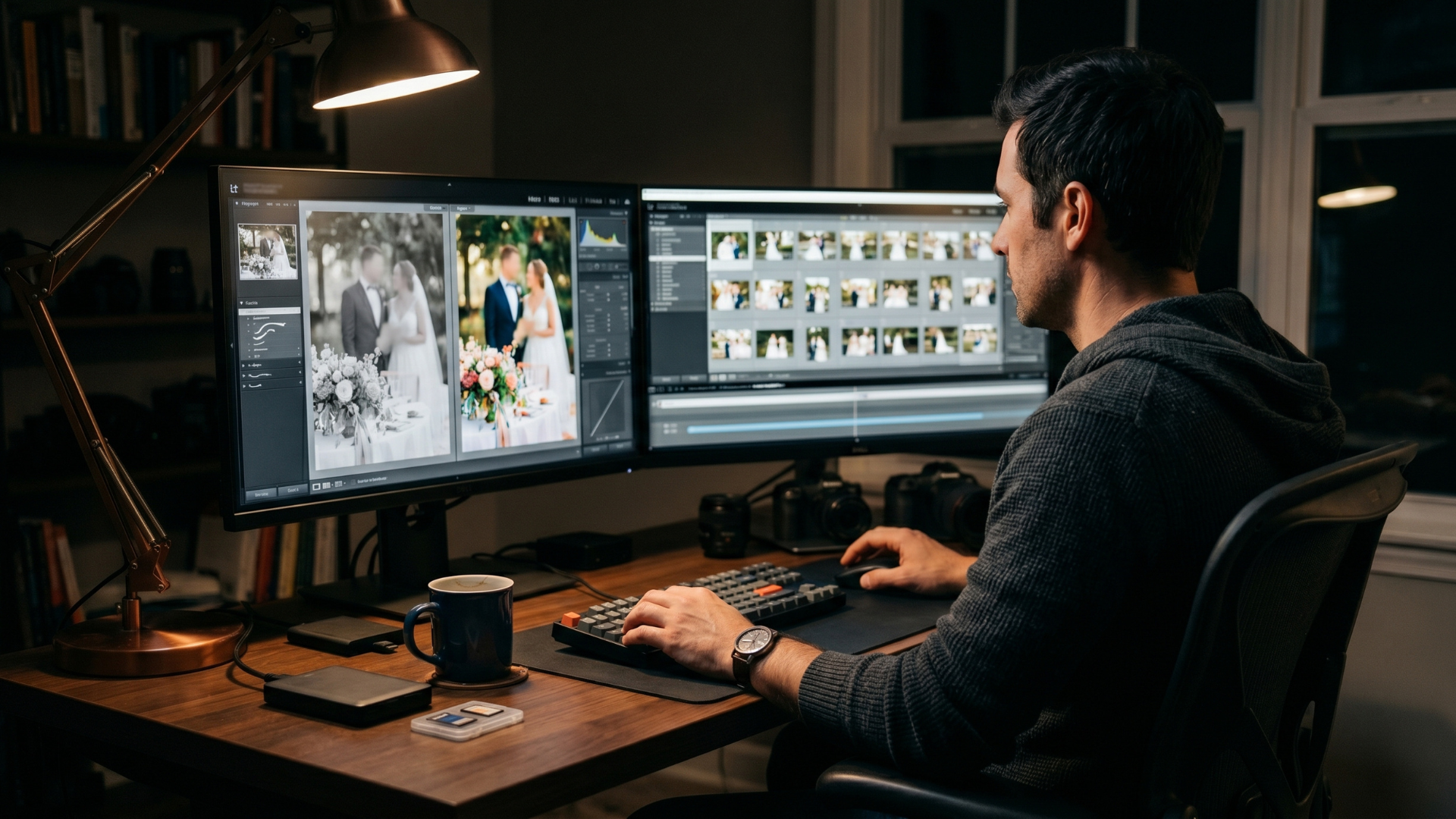
A photographer counted them after the wedding: 47 telephone wires. Every wide shot of the outdoor ceremony had them -- thin black lines cutting across the sky like someone had scratched the lens. In the reception tent, hotel AC units dotted the wall behind the sweetheart table. Exit signs glowed radioactive green above every doorway. Road stakes lined the path to the ceremony site.
Two years ago, removing all of that would have been a full day of clone-stamping. Last week, it took less than an hour. AI-powered removal tools handled every wire, every sign, every metal stake in seconds per image. The photographer delivered the gallery three days earlier than promised.
A wedding photographer swapped a plastic dry-cleaning hanger for an elegant white wooden one using generative fill. The dress was already hanging. The getting-ready room was already lit. But the hanger -- bright blue plastic with a paper cover from the cleaners -- was distracting. One prompt, one click, and the hanger was replaced with something that matched the scene.
The before-and-after clip went viral. Not because the technology was new, but because every wedding photographer who watched it had the same reaction: "I've cloned out a hundred of those hangers. This would have saved me so much time."
Another photographer added a mountain range to an empty, overcast sky for two bonus images. The couple had chosen their venue for the mountain views, but the clouds rolled in at 4 PM and stayed. The photographer delivered the gallery with a note: "Two images with improved sky -- the mountains were there, just hiding." The couple printed one of them as a 24x36 canvas.
Sixty-four percent of solopreneurs already use generative AI for marketing and business operations. For wedding photographers specifically, the tools that are earning their subscription fees fall into a few categories.
Object removal is the biggest time saver. Wires, signs, trash cans, parked cars, porta-potties at the edge of the frame -- the stuff that clone stamp could always handle but never quickly. AI removal tools process these in seconds with results that hold up at print resolution.
Sky replacement is the second most-used feature. Flat gray skies happen at half the outdoor weddings in the Pacific Northwest, the UK, and anywhere between October and March. Replacing them with the sunset that was supposed to show up doesn't fabricate the event. It recovers the mood the couple was hoping for.
Batch color correction is where the real workflow gains are hiding. Tools that learn your editing style from a set of reference images and apply consistent corrections across an entire gallery cut culling and editing time significantly. The output still needs a human pass -- the AI doesn't know which moments matter most -- but the baseline is miles ahead of starting from scratch on every image.
Skin retouching has gotten faster too. Frequency separation and dodge-and-burn used to be the standard for portrait cleanup. AI-assisted tools now handle blemish removal, under-eye smoothing, and skin tone evening in a fraction of the time, while preserving the texture that makes a photo look like a photo and not a render.
All of these tools work on real images from real events. That's the distinction that matters. Removing a telephone wire from a ceremony photo isn't deception. Adding a mountain range to a flat sky is a creative choice the couple can see and approve. Swapping a hanger is the digital equivalent of tidying a room before pressing the shutter.
The line gets crossed when AI generates portfolio images that were never shot, or when alterations change the fundamental reality of the event without the client's knowledge. Removing distractions and polishing real moments is editing. Fabricating moments that never happened is something else entirely.
The time these tools save is genuinely significant. A photographer who cuts ten hours of tedious cleanup from their weekly workflow gets those hours back for marketing, client communication, or just not working until midnight during peak season. Faster turnaround means happier clients. Happier clients mean more referrals. The invoicing and business operations side benefits too -- when you're delivering galleries faster, you're closing out projects and collecting final payments sooner.
Use the tools that make real work better. Skip the ones that replace real work entirely. That's the only framework you need.