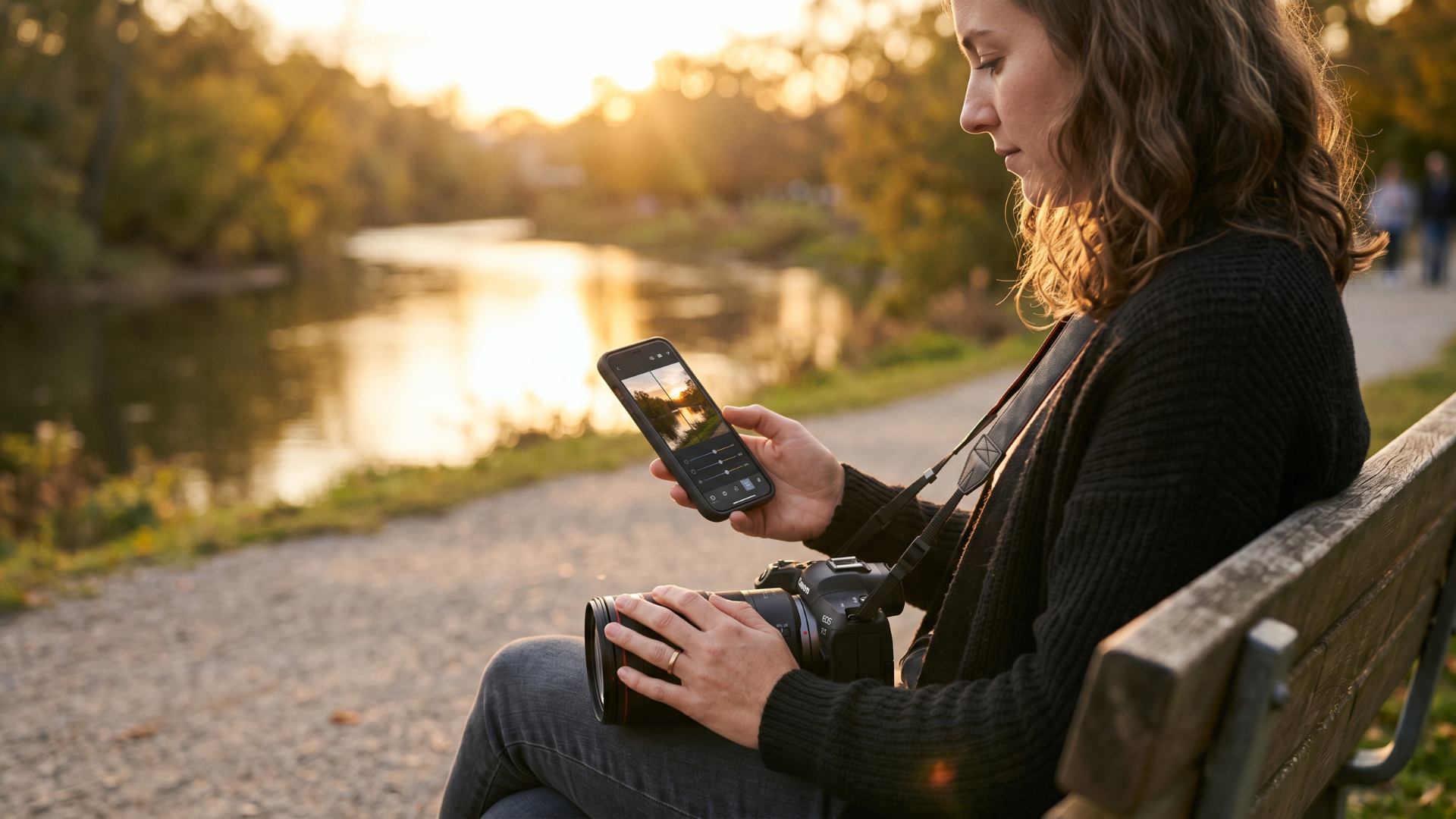
A photographer went to a local park with a branding client. Golden hour, camera in hand, a shallow river winding through the background. The light was perfect. The location was fine -- a well-maintained park off a state highway, nothing remarkable but solid for the shoot.
Then the photographer opened generative fill and typed a prompt: "elephant herd out of focus in water." An entire herd materialized in the river, slightly blurred, perfectly placed in the background. It looked like a riverbank in East Africa. The final images were stunning. The client posted them everywhere. People asked where the shoot happened.
The photographer didn't answer. And they didn't tell the client that the elephants were never there.
Paid partnerships require disclosure. If you promote a product on Instagram and you're being compensated, you tag it. The FTC has enforced this for years. The reasoning is straightforward: people make decisions based on what they see, and they deserve to know when what they're seeing has a financial motivation behind it.
AI-altered images don't have the same regulatory framework. There's no rule that says a photographer must disclose when they've added a mountain range, swapped a sky, or placed a herd of elephants in a river. But the principle is the same. The viewer -- whether it's a potential client, a couple browsing a portfolio, or the branding client who hired you -- is making judgments based on what they see. If what they see was partially generated by a machine, that changes the evaluation.
This isn't about small corrections. Nobody expects a photographer to disclose that they removed a blemish or straightened a horizon. That's been standard practice since darkrooms. The question is about additions -- elements that weren't in the scene, placed there by AI, presented as if they were real.
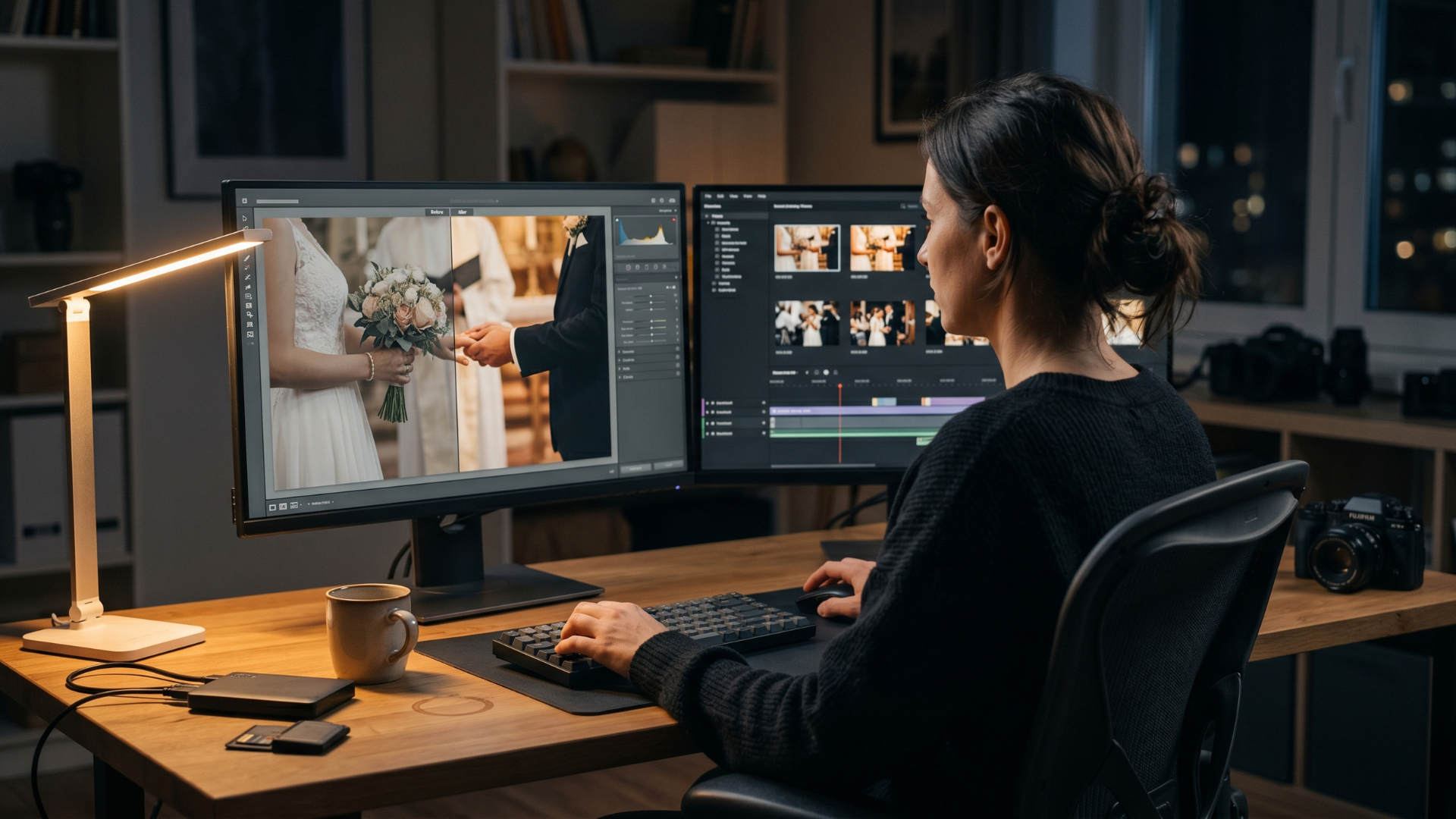
Not all AI edits carry the same weight. Removing a telephone wire is cleanup. Replacing a gray sky with the sunset that happened twenty minutes after the ceremony ended is creative license. Adding a mountain range to a flat horizon is a creative addition. Putting elephants in a river is fabrication.
Most photographers operate comfortably in the first three categories. The work is real. The moment is real. The edit improves or recovers what was already there. The fourth category -- adding elements that fundamentally change the setting -- is where disclosure becomes relevant.
A wedding photographer who composites a dramatic sky into a first-look photo is making a different choice than one who removes an exit sign. Both use AI. Both alter the final image. But one changes the environment the couple was actually standing in, and the other just tidies it up.
The wedding industry doesn't have a formal AI disclosure policy. No trade association has issued guidelines. No platform requires labeling. That means individual vendors get to decide for themselves -- which is actually an advantage for the ones who choose transparency early.
The simplest approach: put your editing philosophy in your contract. A short clause that covers three things. What you routinely remove (distractions, blemishes on request, environmental clutter). What you might improve (sky, lighting, background cleanup). And what you won't do without explicit client approval (adding elements, compositing scenes, generating content that wasn't photographed).
The contract clause library for event vendors already covers deliverable expectations, usage rights, and chargeback protection. Adding an AI and editing disclosure clause is a natural fit. It takes two paragraphs and it preempts the awkward conversation that happens when a client discovers the elephants weren't real six months later.
Wedding photography averages $4,400 nationally, with ranges between $3,500 and $5,300 depending on the market. At that price point, clients aren't just buying images. They're buying trust. Trust that the photographer will show up, perform, and deliver work that represents what actually happened.
Generative AI complicates that trust in a way that previous editing tools didn't. Lightroom presets don't add elephants. Photoshop curves don't change the country. The capability gap between traditional editing and AI-powered generation is wide enough that the old assumptions about what "editing" means don't hold anymore.
If you're removing distractions, you're editing. That's standard and has been for fifty years. If you're adding elements that change what the scene actually was, say so. Put it in writing. Let the client decide how they feel about it. Most will be fine with it. Some won't. Either way, you've been honest -- and in an industry built on personal referrals, honesty compounds faster than any AI tool.
Put your policy in your contract. Be specific. Be early. The vendors who set their own standard now won't have to scramble when the industry eventually sets one for them.