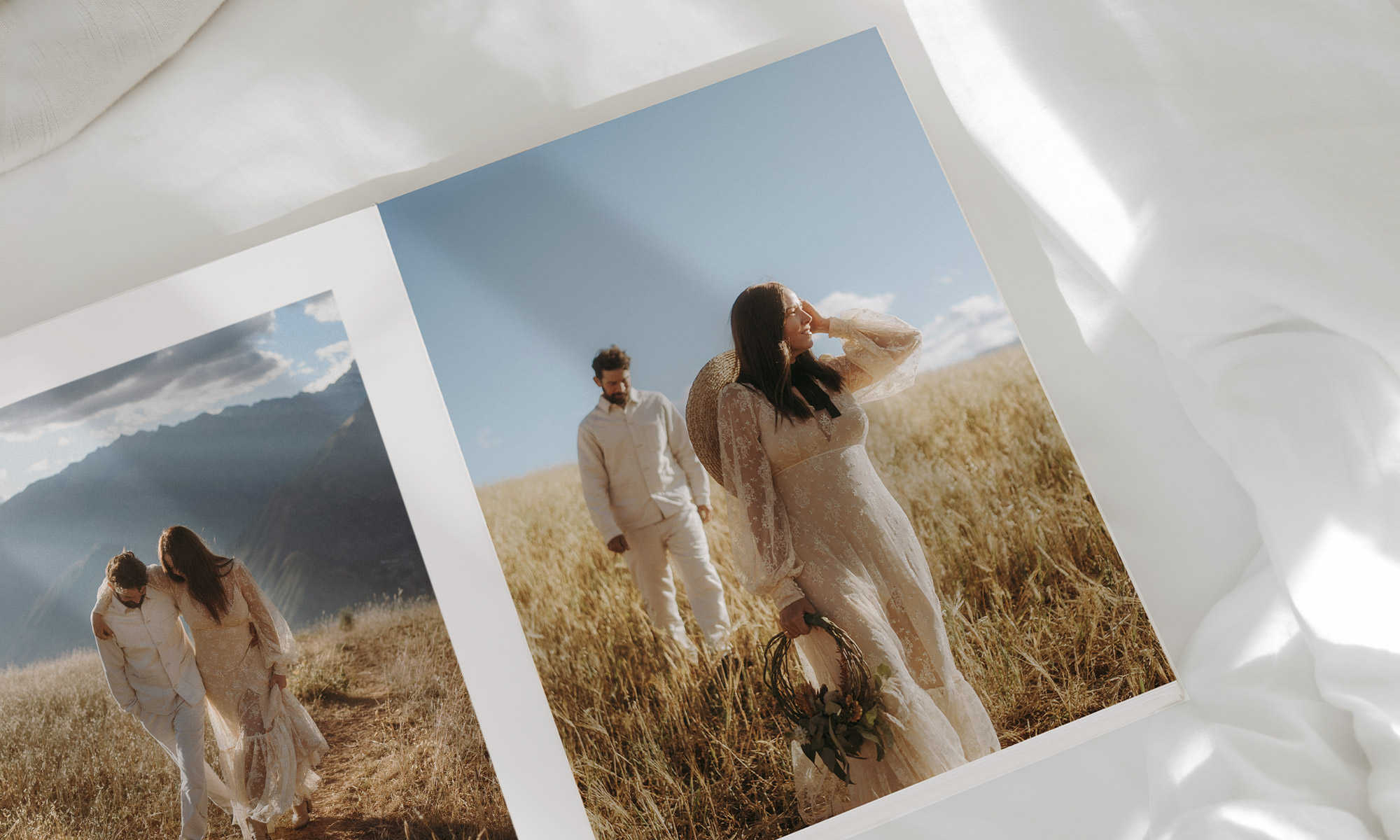
The images looked real. Golden hour backlighting spilling through oak trees. A couple laughing mid-spin on a dance floor. A veil caught by wind against a dramatic sky. A photographer had amassed 5,000 followers, ran targeted ads, and was fielding inquiries from couples planning weddings across three states.
Then someone zoomed in. One image showed thirteen fingers on a single hand. Every face across the portfolio shared the same jawline, the same cheekbones, the same eerily smooth skin. The pores were uniform -- not in the way that good retouching smooths skin, but in the way that a machine renders texture it has never actually seen. The entire portfolio was AI-generated. No real couples. No real weddings. No real experience behind the lens.
Photography businesses in the US grew from roughly 172,000 to 260,000 over the past several years. The number of weddings didn't grow at the same rate. That math means more photographers competing for the same pool of couples -- and more pressure to stand out fast. For a small number of people, AI-generated portfolios became the shortcut. Build a stunning grid in an afternoon, run ads against it, and start collecting deposits before anyone looks too closely.
The risk for couples is real. Wedding photography is one of the few vendor categories where you're buying based almost entirely on past work. You can't taste-test it like catering. You can't walk through it like a venue. You're looking at images and deciding whether this person sees the world the way you want your day to be remembered. If those images were never real, the decision is built on nothing.
Hands are still the most reliable tell. AI struggles with finger count, finger positioning, and the way hands interact with objects. Look at how a couple holds champagne glasses, how fingers rest on a shoulder, how a ring hand sits on a bouquet. If something looks slightly off -- too many fingers, an impossible grip, fingers that merge into each other -- that's a red flag.
Skin texture is the second giveaway. Real retouching preserves some pore variation. AI-generated skin tends to be unnervingly consistent, like plastic wrap with a matte filter. Zoom in on foreheads, cheeks, and the backs of hands. Real photos have texture variation. Generated images don't.
Face consistency across a portfolio is another signal. If every couple looks vaguely like the same two people -- same face shape, same proportions, same expression intensity -- the images may share a common prompt rather than a common photographer.
Background details matter too. Look for repeating patterns in foliage, impossible architectural elements (stairs that lead nowhere, windows at wrong angles), and text on signs that doesn't form real words.
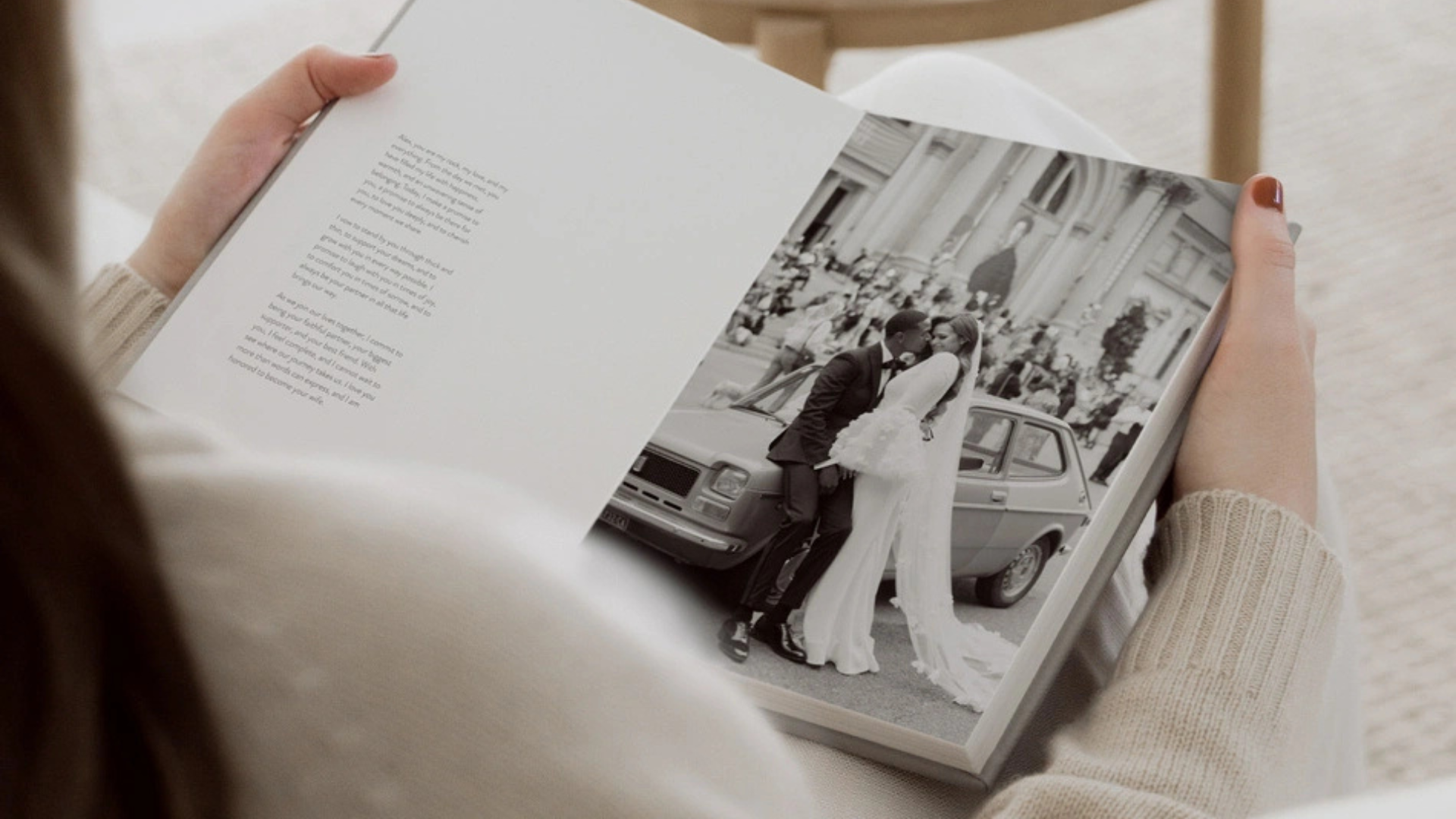
Request a full gallery from a real wedding. Not the ten best images on Instagram. A full delivery -- the candids, the detail shots, the family formals, the reception chaos. AI can generate a convincing best-of gallery, but it can't produce 400 images from a single coherent event with consistent lighting, consistent faces, and consistent environment.
Ask for references. Talk to a past couple. Ask them what the experience was like, not just whether they liked the photos. A real photographer has stories about real weddings -- the rain that started during the first look, the ring bearer who ran the wrong direction, the sunset that broke through at exactly the right moment.
Check for a real web presence beyond Instagram. A well-built photography business has a website, a booking process, and a body of work that extends across platforms. A photographer who exists only as an Instagram grid with no other digital footprint deserves extra scrutiny.
When you've verified the work is genuine, protect both sides. A contract with clear deliverables -- number of images, editing style, delivery timeline, usage rights -- ensures that what you saw in the portfolio is what you'll receive. It also protects the photographer's real work from being misused after delivery.
The irony of fake portfolios is that they make the vetting process harder for everyone, including the legitimate photographers who've spent years building a real body of work. The extra five minutes you spend checking hands, asking for galleries, and requesting references isn't paranoia. It's due diligence for a purchase that averages $4,400 nationally and can't be redone.