A photographer built 5,000 followers on Instagram with an entirely AI-generated portfolio. Every image was stunning -- golden hour backlighting, perfect bokeh, couples laughing in that effortless way that takes years of experience to capture. They ran ads. People inquired. Some booked.
Then commenters started zooming in. One hand had thirteen fingers. Every face across the portfolio shared the same bone structure. The pores were mathematically uniform -- no texture, no variation, no life. The entire body of work was fabricated. Couples were making one of the biggest purchasing decisions of their wedding based on work that had never happened.
This is not a hypothetical. It already occurred. And it sits at the center of a much bigger question the wedding industry hasn't fully reckoned with: where does AI help, where does it hurt, and where is the line?
The photography industry grew from roughly 172,000 businesses to 260,000 in the United States over the past several years, while the number of weddings stayed relatively flat. More photographers competing for the same number of couples. That pressure creates an incentive to cut corners -- and AI-generated portfolios are the most extreme version of that shortcut.
The problem isn't just deception. It's that the work can't be delivered. A couple books based on images that suggest a specific style, a specific eye, a specific way of seeing light. When the actual wedding photos come back looking nothing like what sold them, there's no recourse. The portfolio was never a promise. It was a lie.
This is why protecting your real work online matters more than ever. If your actual images are what set you apart, the last thing you want is someone else feeding them into an AI model to generate knockoffs. And if you're a couple trying to vet a photographer, the difference between a real portfolio and a generated one is the difference between getting what you paid for and getting blindsided on the most documented day of your life.
Building trust with potential clients starts before the first meeting. Transparent proposals that spell out exactly what you deliver -- shot list, timeline, editing style, number of final images -- give couples something concrete to evaluate. When your proposal matches your portfolio matches your contract, there's no room for the kind of bait-and-switch that AI-generated work enables.
The photographers getting burned the worst by fake portfolios aren't the couples. It's the legitimate photographers who lose inquiries to someone whose "work" was generated in thirty seconds. If you've been told Instagram is the first step to building your business, know that the platform's inability to distinguish real from generated work makes it a less reliable portfolio platform than it used to be.
A wedding inspiration account posted images of floating tables in a pool. Crystal glasses catching the light. White cushions perched on the water's surface. Candles flickering between place settings. The photo looked like something from a resort in Santorini crossed with a fever dream. Hundreds of couples saved it to their boards.
Then planners started fielding the requests. "Can we do this at our venue?" The answer, universally, was no. A kid does a cannonball and your rehearsal dinner is gone. The linens soak through in minutes. The structural engineering required to float a dining table with eight place settings on water doesn't exist at a price point that makes sense for a wedding. It was never real. It was AI-generated. And the account didn't disclose it.
Seventy-three percent of couples rely on reviews and visual content when choosing their vendors. That statistic takes on a different meaning when the visual content itself is fabricated. Couples aren't just looking at pretty pictures for fun. They're making decisions -- about budget, about vendors, about what to prioritize. When the reference images are impossible, the planning process starts from a broken foundation.
This is where scope-setting in proposals becomes genuinely protective. A well-built proposal doesn't just list what's included. It defines what's achievable. "Here's what we can do at your venue, with your budget, in your timeline." That kind of specificity is the antidote to a couple who arrives with a folder of AI-generated impossibilities and says, "We want this."
The vendors who handle this best aren't dismissive. They redirect. "That exact setup isn't possible, but here's what we can do that captures the same feeling." That conversation is easier when you have a document -- a proposal, a mood board, a scope outline -- that grounds the discussion in reality.
A photographer counted: 47 telephone wires removed from a single wedding gallery. Road stakes. Hotel AC units bolted to the wall behind the ceremony arch. Exit signs glowing green above the reception entrance. Stray hairs across a bride's face during the windiest outdoor ceremony of the season. All gone in seconds.
A colleague swapped a plastic dress hanger for an elegant white one using generative fill. The before-and-after clip went viral. Another photographer added a mountain range to an empty, overcast sky for two bonus images the couple didn't expect. These aren't ethical gray areas. They're the digital equivalent of straightening a crooked tie before pressing the shutter.
Sixty-four percent of solopreneurs already use generative AI for their marketing. The tools are mainstream. The question isn't whether to use them. It's which ones are worth paying for and which ones waste more time than they save.
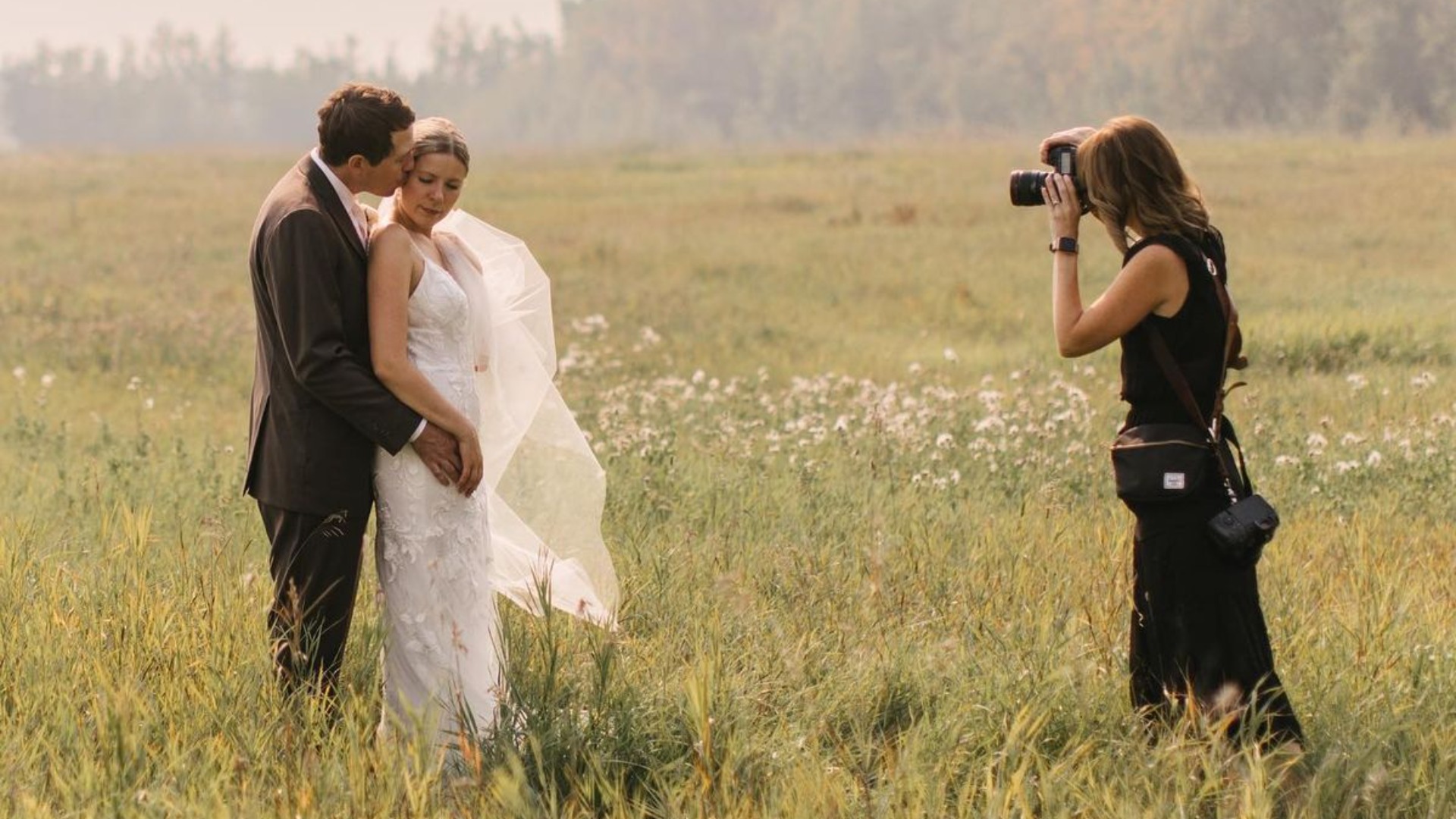
The practical winners right now: object removal (wires, signs, distractions), sky replacement for flat gray days, batch color correction that learns your editing style, and background cleanup for detail shots. The common thread is that these tools work on real images from real events. They're not generating fiction. They're polishing reality.
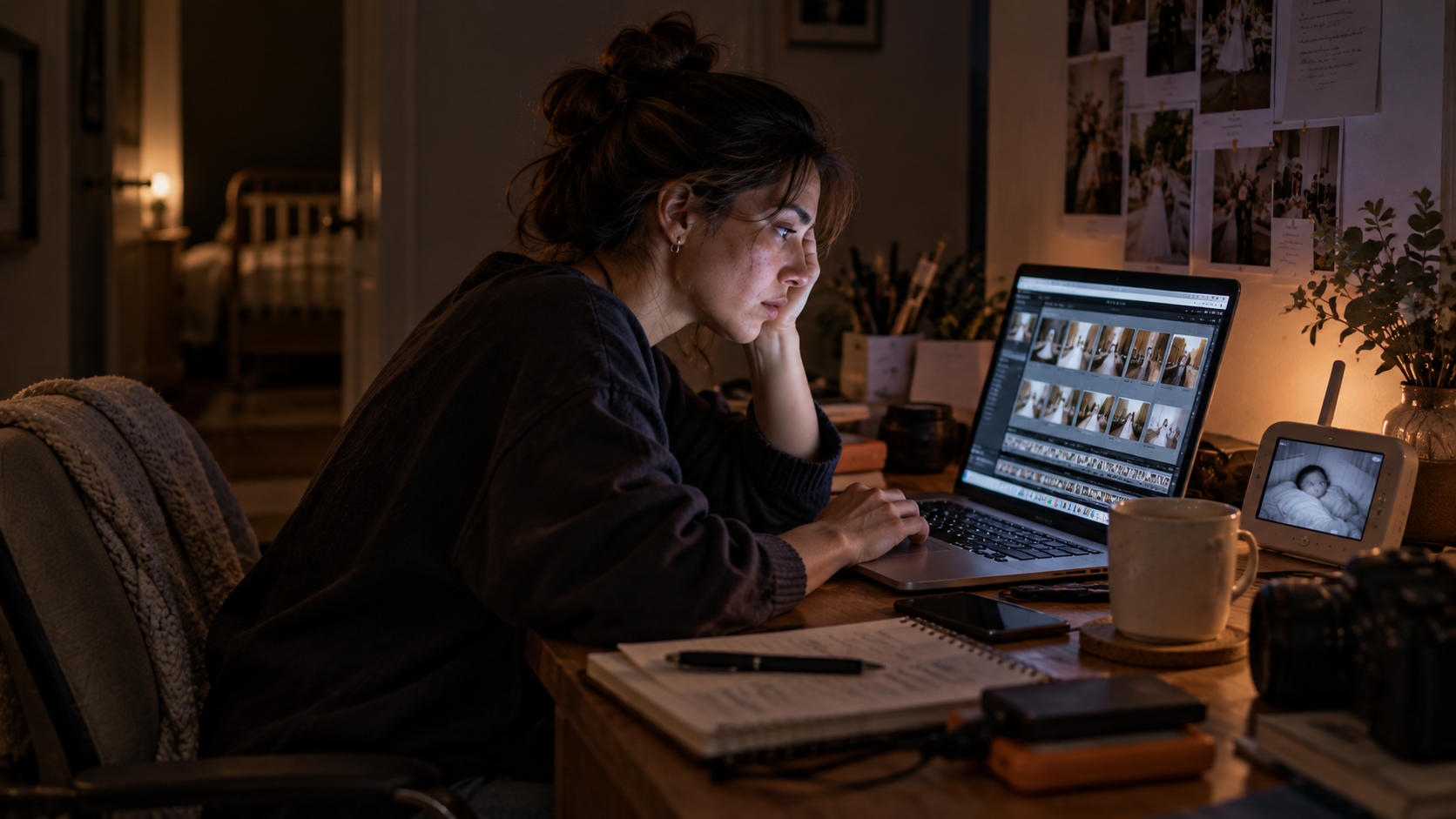
Time saved on editing is time reinvested somewhere else. For some photographers, that means faster turnaround -- galleries delivered in two weeks instead of six. For others, it means spending more time on the client relationship, the follow-up, the experience that generates referrals. Either way, the math works. If you can cut ten hours of wire-removal tedium from your workflow, those ten hours go back into the parts of the business that actually grow revenue.
Paid partnerships require disclosure. You can't promote a product on Instagram without tagging it as sponsored content. The FTC has been clear about this for years. So why can a photographer post AI-generated or AI-altered work without saying anything?
A photographer went to a local park for a branding shoot. Golden hour, camera in hand, a river in the background. Then they opened generative fill and typed a prompt. An elephant herd appeared, out of focus, wading through the water. It looked like Africa. The final images were gorgeous. The client was thrilled.
But there were no elephants. There was no Africa. It was a park off a state highway. Should the photographer have said something?
The wedding industry doesn't have a formal standard here yet. But the principle isn't complicated. If you're adding elements that change what the scene actually was, the client should know. If you're removing a trash can from the edge of the frame, that's standard retouching -- it has been for decades.
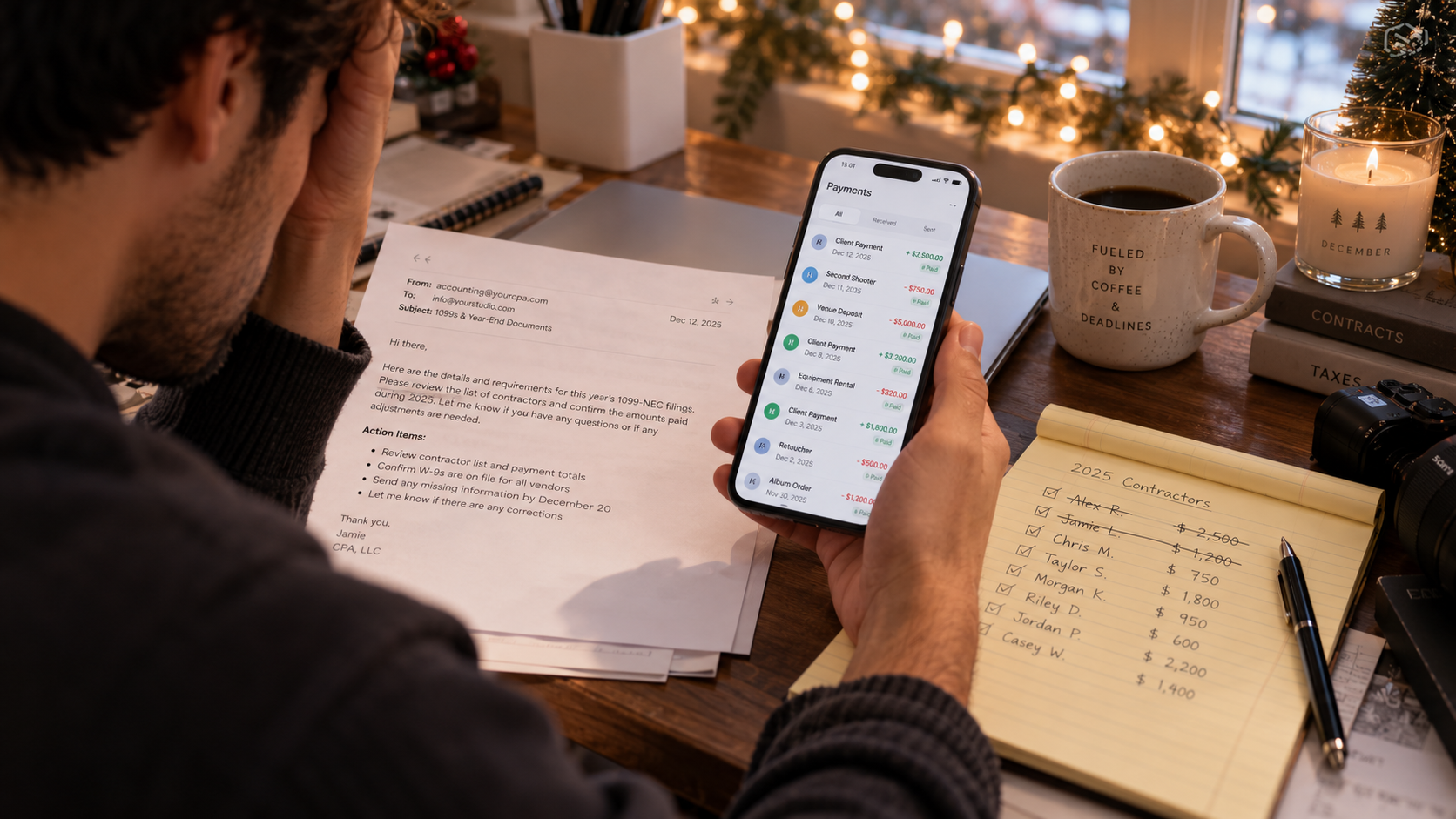
The safest place to put this information is in your contract. A short clause covering your editing approach: what you remove (distractions, blemishes by request), what you might add (sky replacement, background improvement), and what you won't do (face swaps, composite images presented as real). The contract clause library for event vendors already covers deliverable expectations and chargeback protection -- adding an AI editing disclosure clause is a natural extension.
The vendors who get ahead of this will look smarter in eighteen months when the industry inevitably establishes norms. Right now, there are no rules. That means whoever sets their own standard first earns the trust.
AI image models train on photographers' work without asking. The datasets scrape the internet -- Instagram posts, portfolio websites, stock libraries -- and use that visual data to generate new images. Photo manipulation used to require licensing stock from Getty or Shutterstock. AI skips that step entirely.
The editorial and beauty photography industry is hit the hardest. Their work is already highly stylized, controlled, and "perfect" -- which is exactly the aesthetic AI replicates most convincingly. A wedding photographer's candid, chaotic, emotion-driven work is harder for AI to replicate well. But that doesn't mean it's safe from being scraped.
The wedding industry employs 1.2 million people in the US, and 90% of those businesses are small operations. Most don't have legal teams reviewing their IP exposure. Most don't have contracts that address how their delivered images can be used in the age of AI training datasets.
This is where contracts evolve from a formality into a genuine shield. Usage rights clauses that specify how delivered images can and cannot be used. Licensing terms that distinguish between "post on your personal Instagram" and "upload to a platform that feeds AI training models." Protecting your photography online now includes protecting it from becoming raw material for someone else's AI-generated portfolio.
None of this is theoretical anymore. The tools exist. The incentives exist. The only question is whether you build the guardrails before or after something goes wrong.